Pilu
A plain tree of the dry plains with small inconspicuous berries – a simple forest dweller, of the kind whose fibrous twigs serve people as a toothbrush to this day. And yet it was a handful of these fruits that a poor forest fruit-seller once put into the palms of Krishna, and He in return filled her basket with jewels. The cowherd boys eat pilu berries at the midday halt, and many centuries later a handful of the dried fruits would reach Shri Chaitanya Mahaprabhu himself as a relic of Vrindavan – and would burn the tongues of those who did not know that the stone of this berry is not to be chewed.
The Tree in Vraja
There is a lila in Vraja that rests upon a single handful of simple fruits. It happened while they were still in Gokula, before the move to Vrindavan. Pedlars went about the village exchanging their wares for grain, and little Krishna, having watched them, gathered rice in His palms and ran to trade it with a forest fruit-seller. He hurries so that almost all the grain spills on the way, but the woman fills His palms with fruits all the same, and He in return fills her basket with gold and jewels:
phala-vikrayiṇī tasya cyuta-dhānya-kara-dvayam
phalair apūrayad ratnaiḥ phala-bhāṇḍam apūri ca
“Krishna was in such a hurry to reach the fruit-seller that most of the grain He carried in His hand spilled out. But the fruit-seller gave Krishna as much fruit as He could carry all the same. At that very moment her basket was filled with precious stones and gold.”
The Fruits of the Poor Seller
What fruits she gave Him the commentators answer with one voice: pilu berries1. Not mangoes and not pomegranates, but small, inconspicuous berries, the only goods of a poor woman.
Srila Sanatana Gosvami adds a subtlety: having grown rich, the seller perhaps did not even understand what had happened – she took the many-coloured jewels in her basket for the same many-coloured pilu berries and, content with having simply seen the Lord, went home.
The pilu is indeed at home in Vraja. In the Govinda-lilamrita of Srila Krishnadasa Kaviraja Gosvami the forest, wishing to serve the Divine Couple, first of all holds out to Them ripe pilu fruits, and the Sanskrit commentary explains at this place: “the pilu and the karira are known in Vraja by these names”:
supaktrimaiḥ pīlu-karīra-dhātrī-rājādanaiḥ sat-panasāmra-bilvaiḥ
vikaṅkatair jālaka-tāla-bījaiḥ siṣeviṣur vāṁ dhinute'sakau mām
“This forest, wishing to serve You both, gladdens You and me with the ripest fruits of the pilu, the karira, the amalaki, the rajadana, the jackfruit, the mango, the bel, the vikankata, the banana, the tala and the citron.”
In the Forests of Vrindavan
Further on the pilu turns up in descriptions of Vrindavan again and again: at dawn the doves coo in its branches while the parrots sing in the pomegranates and the cuckoos in the mangoes2; at the midday hour the cowherd boys sit down in the forest and eat ripe pilu together with grapes, dates and jambu3. Srila Kavikarnapura in the Ananda-Vrindavana-champu sets the pilu in one row with the mango, the arjuna, the karavira and the tamala, listing the trees of Vrindavan and of the groves of Nandishvara4.
And when Srila Rupa Gosvami in the Lalita-Madhava leads Krishna through the forest, He greets the trees as old acquaintances – the kadambas, the bakulas, the pilu trees – and wishes them well, calling them the companions of Radha5. The same pilu lies in the handful with which Krishna shares with His cowherd friends: Sanatana Gosvami in the Brihad-bhagavatamrita lists oranges, pilu, karira, dates and pomegranates and explains that ripe all at once they can be found only in the forest of Vrindavan.
The Pilu in the Poetry of Vraja
The pilu has its place in verses about the beauty of Krishna and in verses about pretence. First of the beauty: the shins of Krishna, Krishnadasa Kaviraja Gosvami likens to a pillar of the dark stone pīlu-nīlāśma, to which the minds of the young gopis are drawn as if tied6. What that stone is, is hard to say: for the word pīlu the lexicons know a tree, an arrow, an elephant, a flower and even an atom, but no stone among the meanings.
And now of pretence. When Balarama hears that the gopis are being given in marriage, outwardly He rejoices, but the discerning see that within He is joyless – and Srila Jiva Gosvami finds an image for this:
bahiḥ surasatāṁ vyañjann api tarhi balānujaḥ
antas tu virasaḥ praikṣi marmajñaiḥ pakva-pīluvat
“Outwardly showing sweetness, the younger brother of Balarama within, as the knowers of hearts saw, remained joyless – just like a ripe pilu fruit, red without but insipid within.”
The ripe pilu is scarlet and inviting, and insipid within – exactly like a feeling hidden under a courteous face.
Chaitanya Mahaprabhu
The pilu fruits have a story of their own in the Gaura-lila too. When Jagadananda was returning from Vrindavan to Jagannatha Puri, Sanatana Gosvami sent through him gifts for Mahaprabhu – not gold and not silks, but relics of Vraja itself: earth from the place of the rasa-lila and other gifts, among which there was also a handful of dried pilu fruits. Mahaprabhu carefully kept everything, but the pilu fruits he distributed to the devotees with the words “this is a fruit from Vrindavan”, and all ate them with joy. And then this happened: those who knew this fruit sucked the stone, while the Bengalis, seeing it for the first time, began to chew the seeds whole:
mukhe tāra jhāla gela, jihvā kare jvālā
vṛndāvanera 'pīlu' khāite ei eka līlā
“The seeds of the pilu have a sharp, burning taste, and so those who chewed them burned their tongues. Thus the tasting of these Vrindavan pilu fruits became yet another of the pastimes of Shri Chaitanya Mahaprabhu.”
The dry, inconspicuous fruit turned out to be dearer than treasures – because it came from the land of Krishna. Not for nothing, singing the abundance of Vrindavan, does Krishnadasa Kaviraja Gosvami name the pilu in another place too among the countless fruits of Vraja that are “here always, in thousands of kinds”7.
Beyond Vraja
Beyond Vrindavan the pilu is recalled rarely. In the Devi-bhagavata Purana it is named among the trees of Mani-dvipa, the abode of the Goddess – with flowers, fruits and young foliage giving off a sweet fragrance. And in the Mahabharata, in the section on food, the pilu is mentioned as a fruit-bearing tree on whose berries, together with roots and tubers, the forest hermits lived8.
Ayurveda
In Ayurveda the pilu is valued for its burning, clearing nature. The taste (rasa) of the fruit is somewhat bitter and sweet, its qualities light, unctuous and penetratingly pungent, its potency (vīrya) hot, its aftertaste (vipāka) pungent; by this it pacifies kapha and vata. Hence its place in the lists: Charaka counts the pilu among the remedies that clear the head, aid purgation and bring down fever; Sushruta likewise counts it among those that clear the head. The nighantus have not passed the pilu over either: the Bhavaprakasha, the Dhanvantari and the Raja-nighantu place it in the class of fruits, and the Kaiyadeva-nighantu among the medicinal plants.
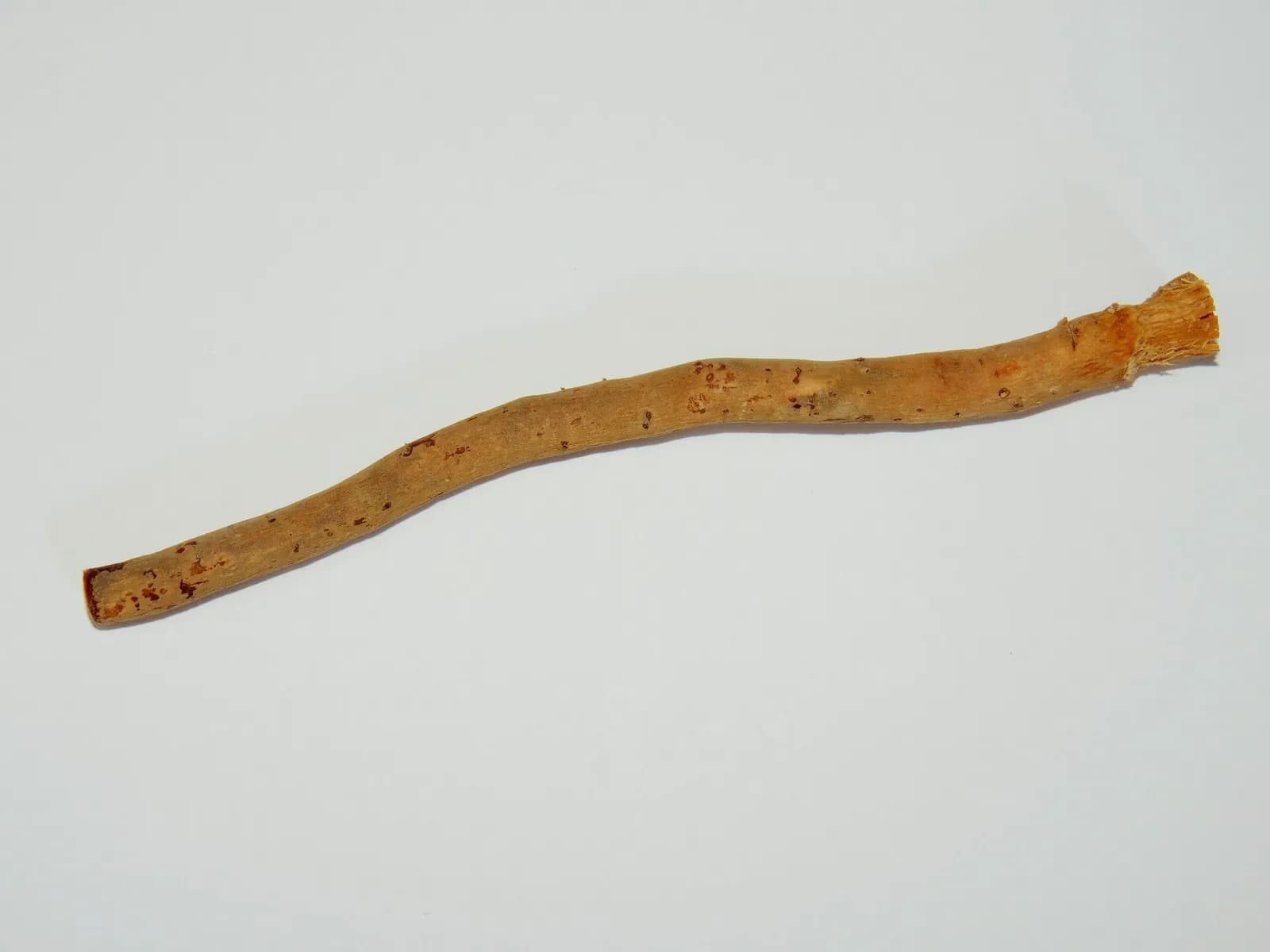
The fruit, the seed, the leaf and the root bark are used; with them cough and fever, rheumatic pains and haemorrhoids are treated, and they are applied for snakebite. But the world knows the tree not for this but for its fibrous twigs: the chewed end of such a twig is the miswāk, the natural toothbrush with which teeth are cleaned all across the dry belt from India to Africa.
Botany
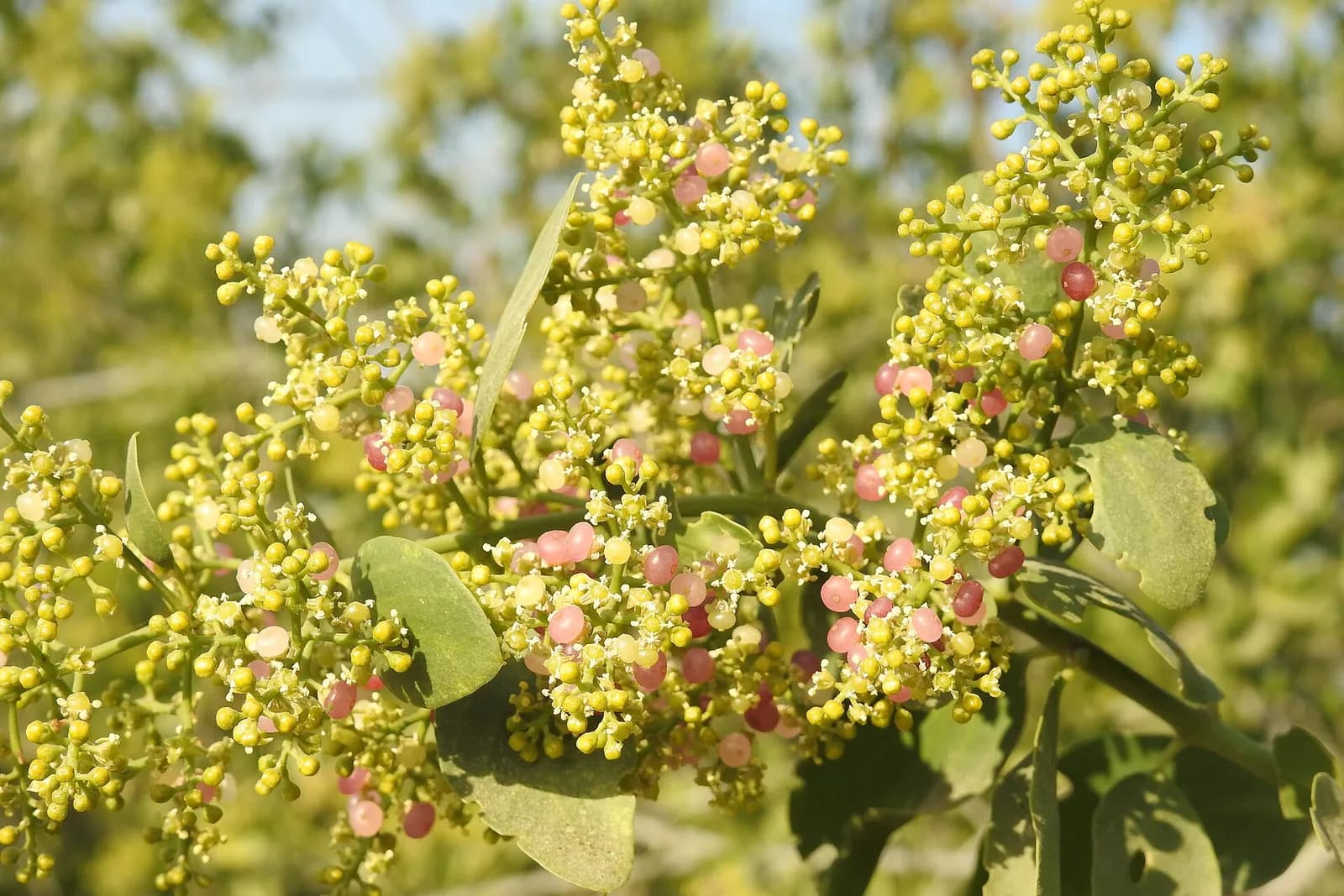
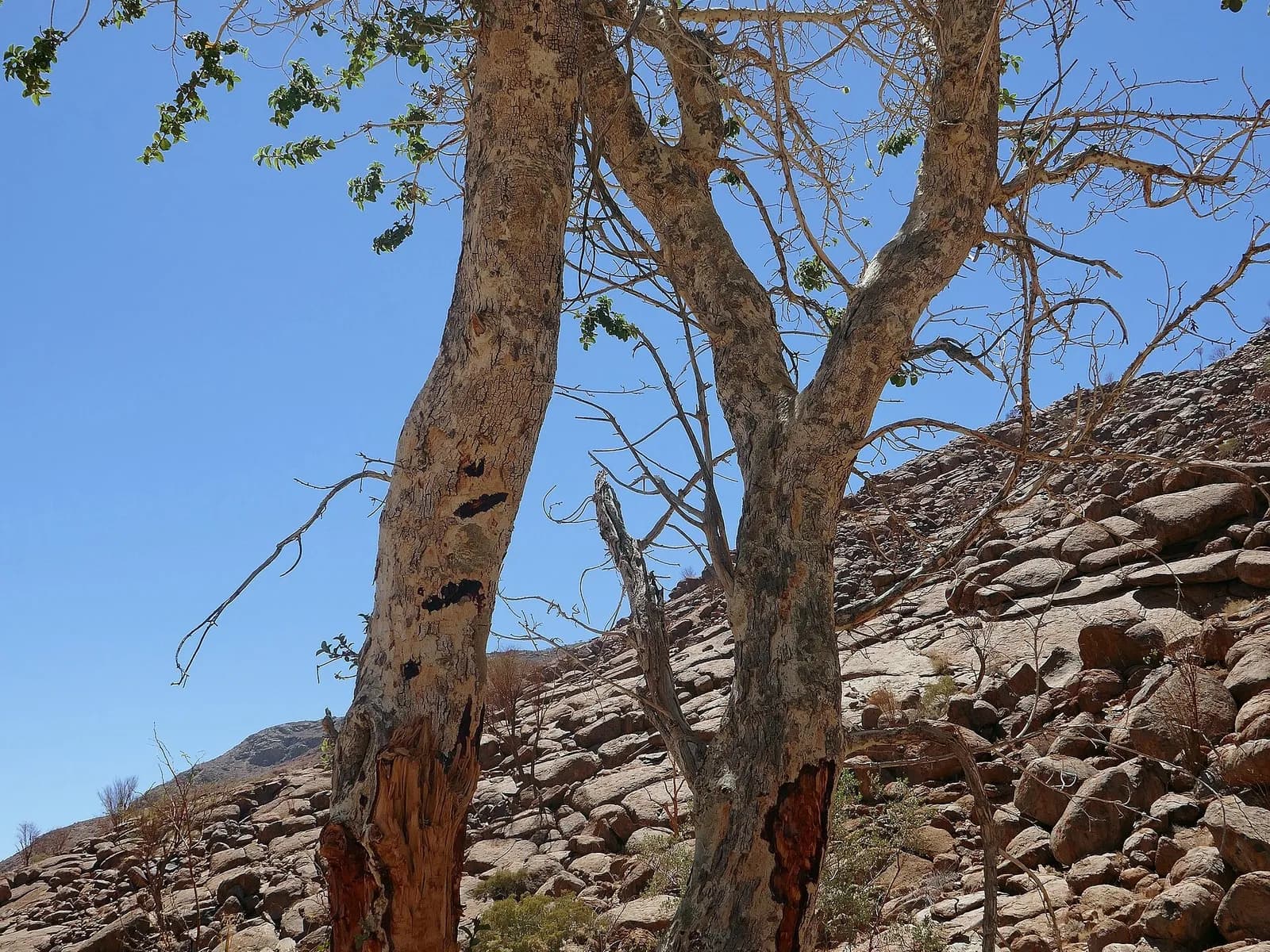
The pilu is Salvadora persica. Its trunk is crooked, rarely thicker than thirty centimetres, the bark whitish and cracked, and the tips of the branches droop softly. The leaves are oblong-elliptic to almost round, fleshy to the touch. The berries are spherical and juicy, turning from pink to scarlet, with a single stone inside.
It was not the berries themselves that burned the Bengalis’ tongues but precisely these stones: the seeds of the pilu are rich in volatile mustard oils – for them the tree is called the mustard tree in English. The root bark gives off the smell of cress and is warm and burning to the taste. The tree bears drought and saline soil well and grows across the dry belt from tropical Africa through Arabia to India and Sri Lanka; in the dry districts of north-western India the closely related Salvadora oleoides occurs beside it, which in Punjabi is called by the same name, jal.
Pilu: the berries, the tree and the miswak
Sources
We build Vrajapedia together – with stories, verses, photographs and parikrama experience. If you know something more, tell us and it will appear on this page.