Blue Lotus (Water Lily)
A dark blue water lily that opens over the ponds of Vraja in the morning and closes towards the end of the day. It is called the blue lotus, though the true lotus is another plant, and blue it never is. It has no lila of its own – it lives in the verses as a colour with which the body of Krishna and the eyes of Radha are compared. And in that comparison it always loses: Krishna is darker and softer than it; while the flower itself, in the words of Krishnadasa Kaviraja, came out of what was left over when the creator gathered all the sweetness of the world into the eyes of Radha.
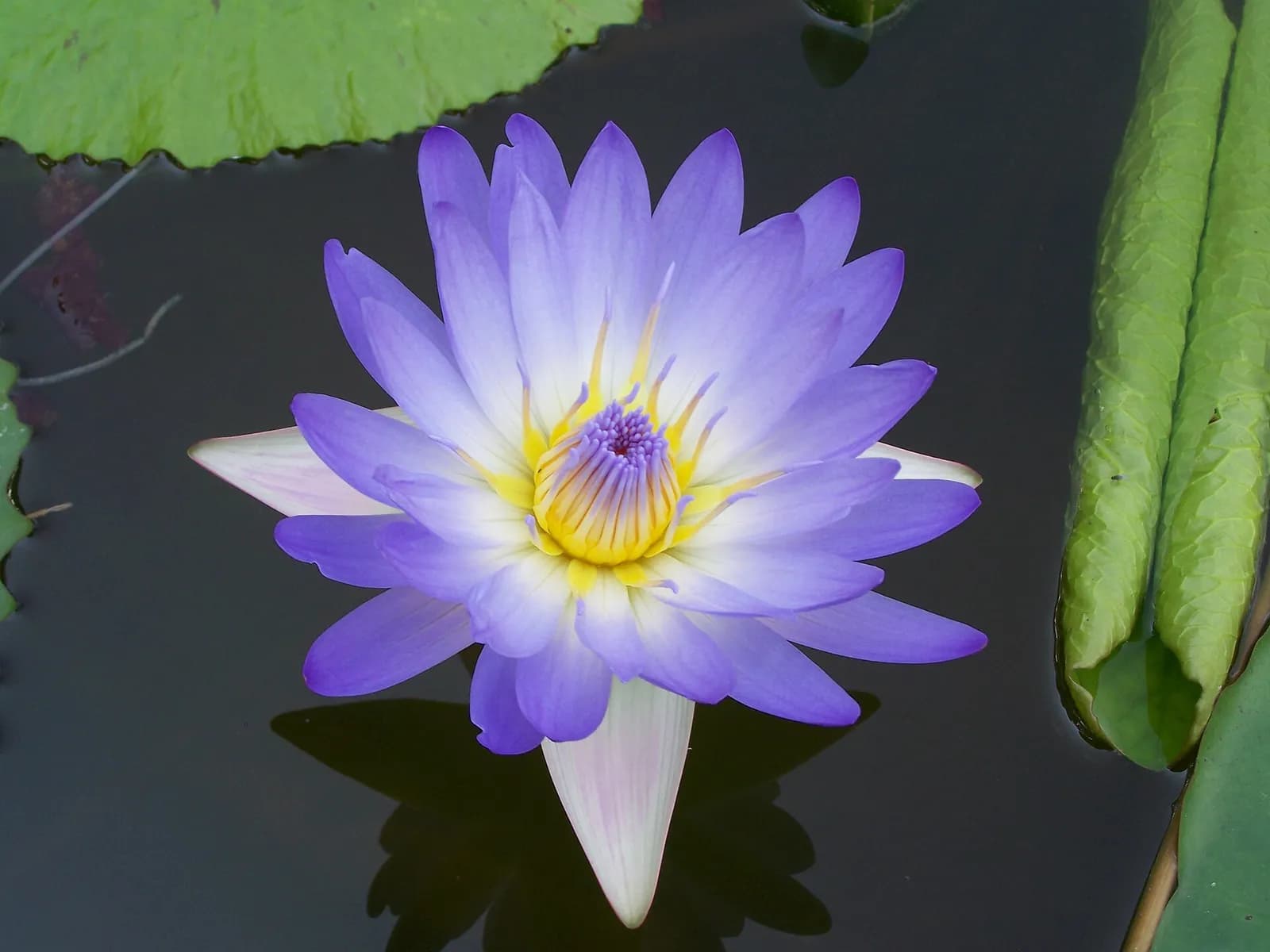
Lotus or Water Lily
The flower in question is called by Sanskrit utpala, kuvalaya or indīvara. All three names the Amarakosha places in its section on water lilies and explains that they belong to the blue kind, while the white are kumuda and kairava. The lotus has an entry of its own in the same lexicon, under the names padma and kamala1.
The poets, though, do not keep this border strictly: in the Govinda-lilamrita the commentator explains indīvara-dvaya, “two indivaras”, by the words nīla-padma-dvaya, “two blue lotuses” – that is, he uses both words as one. So the question cannot be settled by names.
Botany settles it. The true lotus is the genus Nelumbo, and it has only two species: the Indian, with pink and white flowers, and the American, with pale yellow ones. There are no blue ones among them and there cannot be: the lotus does not produce blue pigment at all. Among the water lilies, Nymphaea, blue forms are common – in India this is Nymphaea nouchali, in Egypt Nymphaea caerulea, the very “blue lotus” of the ancient paintings. So the blue flower of the shastras is, botanically speaking, a water lily, and “blue lotus” is a translation that has taken root but is conventional. Further on in this article it is still called the blue lotus: the name has settled both in translations and in Vaishnava usage.
The Blue Lotus in Vrindavan
Into the verses this flower enters above all by its colour. The body of Krishna is dark – not black, but exactly that dark blue of a thundercloud and of this petal. And so, when a poet wants to name the colour of Krishna in one word, he takes the blue lotus. Srila Jayadeva Gosvami in the Gita-Govinda paints Krishna playing with the gopis in spring just so:
viśveṣām anurañjanena janayann ānandam indīvara-
śreṇī-śyāmala-komalair upanayann aṅgair anaṅgotsavam
“Delighting all, Krishna awakens bliss; with soft dark limbs that surpass the blue lotus He opens the festival of the god of love.”
The word indīvara – the blue lotus – the commentator unfolds by three marks at once: darkness, softness, coolness. Not merely “dark as the flower”, but dark, soft and cool to the touch, like a wet petal. This shade accompanies Krishna from His very birth. When on the night of His coming Yashoda woke from sleep and saw her son for the first time, she saw, in the words of the Vishnu Purana, an infant “dark as the petal of a blue lotus” – and was overcome with happiness. This verse is quoted both by Srila Jiva Gosvami in the Gopala-champu and by Srila Sanatana Gosvami in his commentary on the Tenth Canto2. And years later, when Akrura came to take Krishna away from Gokula, he caught sight of Him among the calves at the milking – of the colour of the petal of an opened blue lotus.
But this comparison always has one outcome: the living flower fades beside Krishna. Shri Chaitanya Mahaprabhu, looking at Krishna with the eyes of Radha, says this:
nava-ghana-snigdha-varṇa, dalitāñjana-cikkaṇa,
indīvara-nindi sukomala
“Tender in colour as a fresh cloud, glossy as ground collyrium, Krishna puts the blue lotus to shame and in softness surpasses all comparison – His beauty irresistibly draws the eyes and minds of all.”
In a Pair and in Its Element
The blue lotus usually goes in a pair – with the golden champaka. Srila Prabodhananda Sarasvati in the Vrindavana-mahimamrita sets them side by side again and again: Krishna is the blue indivara, Radha the golden flower of the champaka, and the whole forest is clothed in these two colours.
And the blue lotus grows in the Yamuna and in the forest ponds of Vraja. “He who has never seen the Yamuna of Vrindavan, full of ever-blooming indivara, kamala, kahlara and kumuda – is he alive at all?” exclaims Prabodhananda Sarasvati. But even here, in its own element, the flower remains in a secondary role: the dark water of the Yamuna itself, in the words of Jiva Gosvami, “dims the lustre of the blue lotus”. And Krishnadasa Kaviraja Gosvami notes a subtlety: when the moon of Radha’s face rises above the pond, both the blue lotuses and the white night lilies open in the water at once. The blue lotus is a flower of the day, the white lily one of the night, and neither sun nor moon will make them open together.
And in the pastimes themselves the blue lotus more often serves as an occasion than as an ornament. Krishnadasa Kaviraja has a scene where Radha, turning her neck aside as if afraid of His touch, adorns Krishna with a garland of blue lotuses – Her own sidelong glances – and, with a barely audible reproach, walks away3.
And in the Krishna-bhavanamrita of Srila Vishvanatha Chakravarti Thakura, Krishna takes a lotus in His hand, kisses it and praises it: “you have defeated everyone with your fragrance!” Radha flares up, and He, pleased, promises to smell both the flower and Her face, so as to sing with His flute of whichever is the sweeter.
Worship
The blue lotus is offered to Krishna as well. The Hari-bhakti-vilasa lists the flowers always pleasing to the Lord, and the blue lotus is there; more than that, Srila Sanatana Gosvami gathered a separate little chapter on its greatness, quoting verses from the Vishnu-dharmottara:
suvarṇa-daśa-dānasya phalaṁ prāpnoti mānavaḥ
dattvā nīlotpalaṁ viṣṇor nātra kāryā vicāraṇā
nīlotpala-śataṁ dattvā vahniṣṭoma-phalaṁ labhet
nīlotpala-sahasreṇa puṇḍarīkam avāpnuyāt
lakṣa-pūjāṁ naraḥ kṛtvā rājasūya-phalaṁ labhet
“One who offers Vishnu a blue lotus gains the fruit of giving ten pieces of gold – there is nothing to discuss here. A hundred blue lotuses give the fruit of the agnishtoma sacrifice, a thousand the fruit of the pundarika sacrifice, and a hundred thousand the fruit of the rajasuya-yajna.”
The count runs into hundreds and thousands, and the comparison is with the great Vedic sacrifices: a handful of blue lotuses on the altar is worth a whole rite. In the same chapter there is a sterner verse too: the Skanda Purana says that a person who has never offered Hari either a white or a blue lotus “has ruined his life and fallen into the maw of Kali”4.
Blue lotuses grow in the holy ponds of Vraja as well. Srila Rupa Gosvami, going through the places here in the Mathura-mahatmya, describes one of the kundas as a pond “of clear water, adorned with blue lotuses”, where by bathing and by giving alms one gains the desired fruit.
The Eyes of Radha
But most often the blue lotus is recalled in describing eyes. The eyes of Radha and Krishna, elongated and slightly reddish at the corners, the poets of Vraja compare with it constantly. And here Krishnadasa Kaviraja Gosvami turns the usual order of things upside down:
nayana-yuga-vidhāne rādhikāyā vidhātrā
jagati madhura-sārāḥ sañcitāḥ sad-guṇā ye
bhuvi patita-tad-aṁśas tena sṛṣṭāny asārair
bhramara-mṛga-cakorāmbhoja-mīnotpalāni
“In creating the eyes of Radha, the creator gathered all the sweetness and the finest qualities of the universe. And the remnants he dropped on the earth – and out of them, as out of worthless refuse, came bees, deer, chakora birds, lotuses, fish and blue lotuses.”
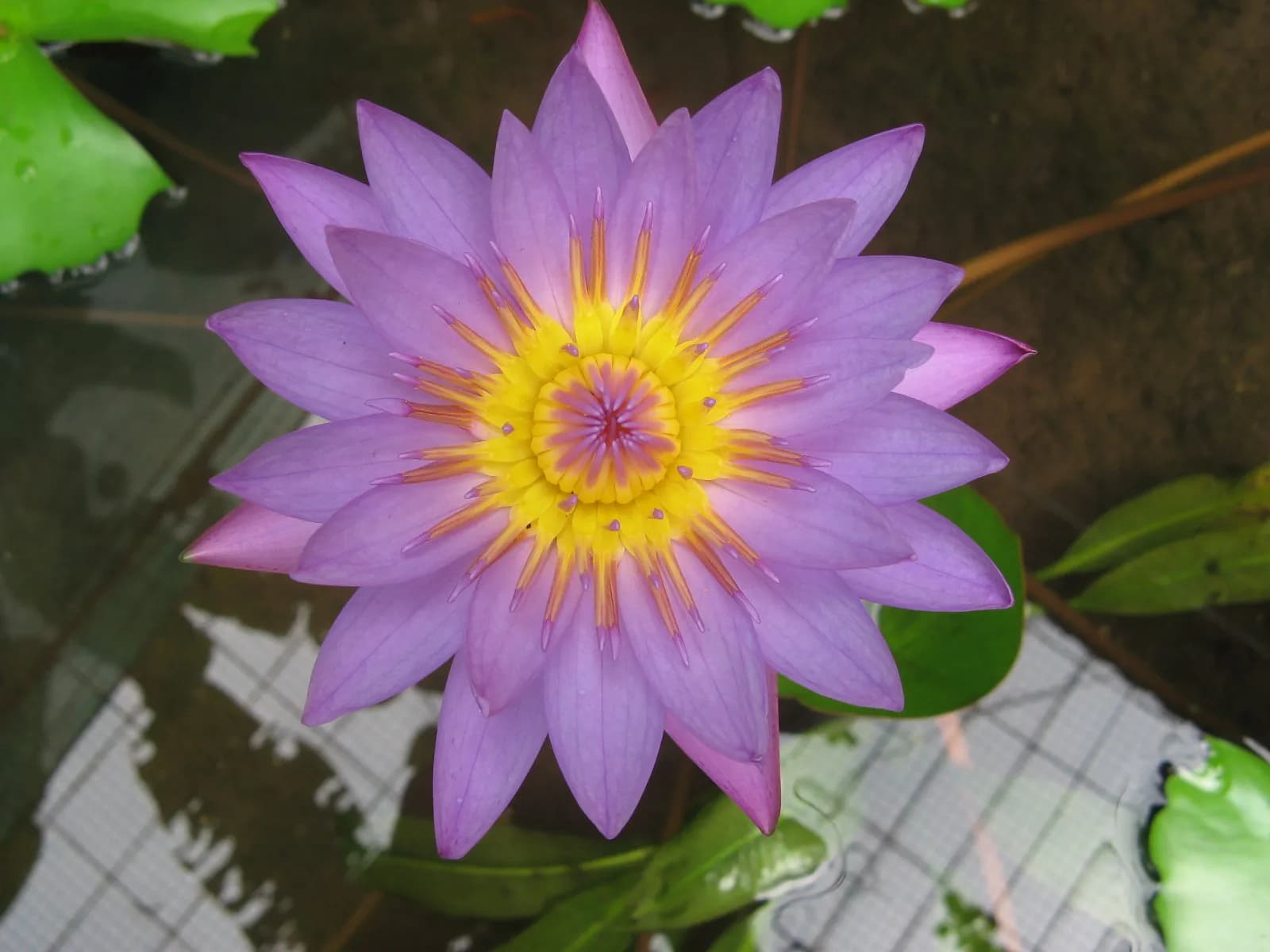
The Sixth Arrow of Kama
This is why the blue lotus always loses: it is itself the discarded remnant of the eyes of Radha, and not the other way round. The same image is unfolded by Srila Rupa Gosvami in the Utkalika-vallari, going through the things to which those eyes were compared. And still they do not stop comparing. In another line of Prabodhananda Sarasvati the eyes of Radha are two chakora birds with a single friend: the dark, blue-lotus “moon” of Krishna; let Him go, and the chakora eyes go blind5.
The name itself stands in a row with its neighbours. Srila Rupa Gosvami in the Ujjvala-nilamani puts into Krishna’s mouth a list of flower names: the white bud is kairava, the red lotus kokanada, the bee indindira, and the blue lotus indīvara. With these names Krishna plays at once: the white bud of His flute in the dark locks of Radha seems a blue indivara. And through the blue lotus the god of love enters the verses as well. Kama carries five flower arrows, and the verse that Rupa Gosvami quotes there calls the eye of Radha “the sixth arrow of the five-arrowed Kama”6 – the one against which there is no defence. And the flower itself stands among those five – in the list of the Amarakosha, under its own name nīlotpala, beside the aravinda (the ordinary lotus), the ashoka, the chuta (mango) and the navamallika7.
Beyond Vraja
The blue lotus flowers in the shastras outside Vrindavan too. When Narada Muni arrives in Dvaraka, the Bhagavatam describes its lakes, full of opened indivara, ambhoja, kahlara, kumuda and utpala, where swans and cranes call to one another – the same flower as in Vraja, but now in the adornment of a royal city. And in the verse of the Bhagavatam about Vaikuntha, which Srila Sanatana Gosvami quotes in the Brihad-bhagavatamrita, the utpala – another name of the same flower – stands among the heavenly flowers that honour the austerity of Tulasi, seeing how the Lord prefers her to all the rest. From the ponds of Vraja to the gardens of Vaikuntha – everywhere this lily turns out to be the companion of a more glorious neighbour.
Ayurveda
Ayurveda values the blue lotus for its coolness. The Raja-nighantu calls it cooling and pleasant in taste, recommends it for burning, exhaustion, vomiting and fever, and names it a remedy for rakta-pitta – bleeding. Its taste (rasa) is astringent: so says the Charaka-samhita, and it sets the utpala against the same things. The names in the nighantus speak for themselves: Anushna (“not hot”), Hima-abja (“the icy lotus”), Shita-jalaja (“the cool one, water-born”). The rhizome, the young leaves and the flower stalks are used: they are eaten as a vegetable, and a powder of the rhizome is given for haemorrhoids, diarrhoea and indigestion.
One qualification. Beside the “cool” names the same compendium sets Ratri-pushpa (“the night flower”) and Nisha-phulla (“blooming at night”), while our lily is closed by night. Under the name utpala the Ayurvedic compendia keep more than one species of water lily, and the medicinal properties are recorded for the whole group at once.
Botany
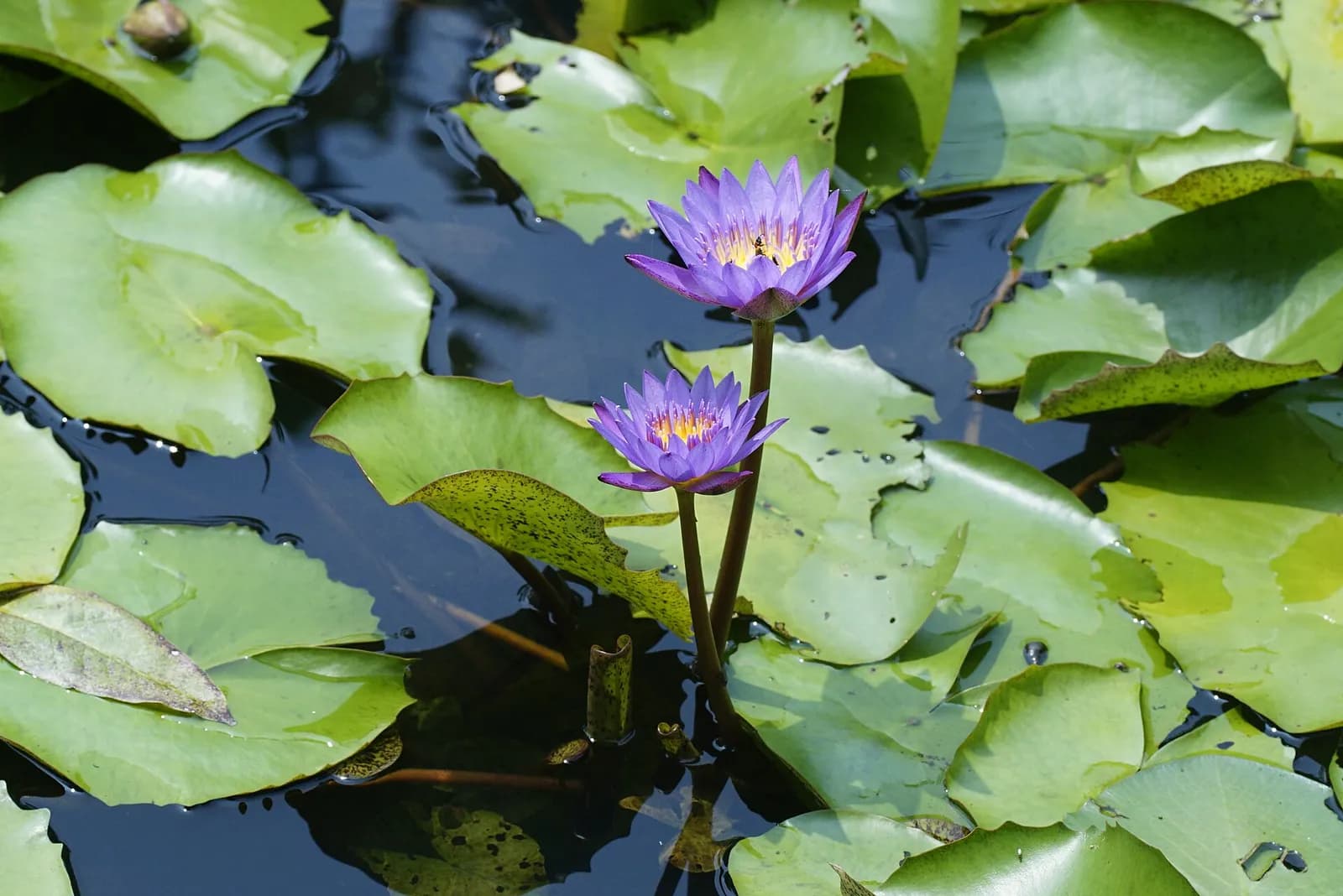
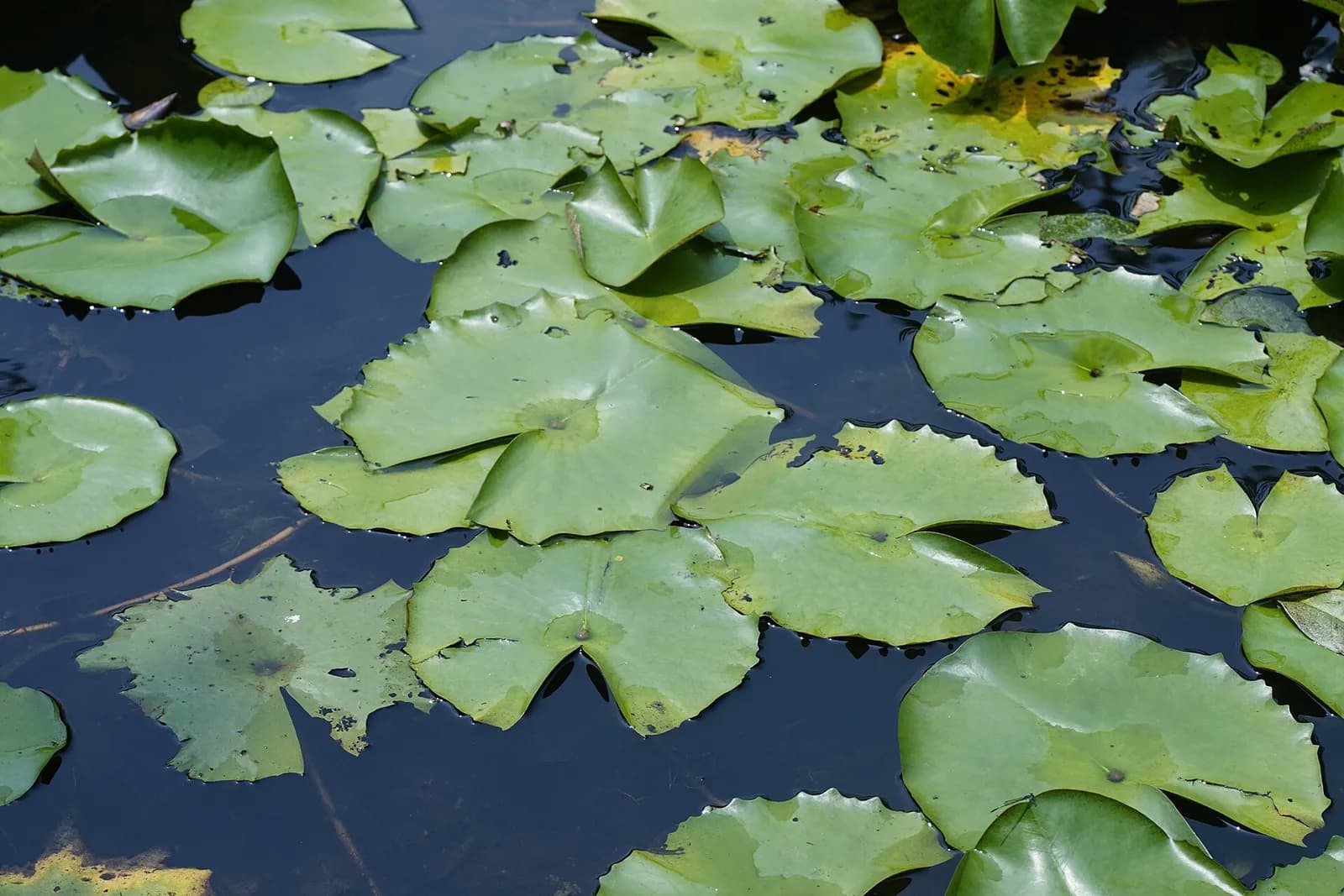
Botanists know the blue lotus as Nymphaea nouchali; the formerly current name N. stellata refers, by the present Kew checklist, not to the whole species but to its type variety. This is a water lily and not the pink lotus-padma (Nelumbo), with which it is often confused in translations: two different plants from different families. The rounded leaves, 25–40 cm across, float on the water, while the flower rises above it; its centre is pale yellow.
This lily occurs throughout the tropical and subtropical Old World – from Egypt and Africa through India to northern Australia – and in India it is native, not introduced. Its light blue variety (var. caerulea) is the very “blue lotus of the Nile”, famous already in ancient Egypt. The name nilotpala itself is made of nīla, “blue”, and utpala, “lotus”; in Hindi the flower is called by the same word – nilotpal, and also nilkamal, “the blue kamala”.
Blue lotus: the flower and its kin
Sources
We build Vrajapedia together – with stories, verses, photographs and parikrama experience. If you know something more, tell us and it will appear on this page.


