Neem
The neem is a bitter tree. Bitter is its leaf, bitter its fruit, bitter too the twig with which teeth are cleaned in an Indian village; Ayurveda calls it “the best among the bitter” and treats fever and skin diseases with it. For the poets of Vraja the neem is the thing to which everything unpalatable is compared: the bitter fruit of knowledge against the sweet bud of love. And it was from this same tree that Lord Chaitanya took His childhood name – Nimai, “born under the neem”.
The Tree in Vrindavan
The neem grows in Vraja as well. Srila Vishvanatha Chakravarti Thakura in the Krishna-bhavanamrita, describing the bowers of Vrindavan, sets it in one row with the jackfruit, the mango, the karanja, the pippala and the banyan: these trees, he says, are like householders giving alms – fruits and flowers – and grow in groups of four, entwined with vines, forming secluded arbours1.
And in the verses the neem is bitterness itself, and by it the sweetness of Krishna is tested. The image is usually unfolded through two birds: the crow that pecks at the bitter fruit of the neem, and the cuckoo that waits for the honeyed bud of the mango. It is on the cuckoo that Srila Krishnadasa Kaviraja Gosvami builds his verse in the Govinda-lilamrita:
yā yā jātā hari-guṇa-lava-sparśa-pūtā rasajñā
sā sā jātu spṛśati nitarāṁ kvāpi vārtāṁ tad anyām |
mākandīya-prathama-mukulāsvāda-puṣṭāny apuṣṭa-
śreṇī yā sā rasayati kathaṁ kuṭmalaṁ paicumardam ||
“A taste once purified by the touch of a drop of the qualities of Hari will never again reach for anything else. Will a cuckoo reared on the first bud of the mango start tasting the bitter fruit of the neem?”
Vishvanatha Chakravarti resorts to the same image in discussing the scene with Uddhava. When he brings the gopis the “saving” knowledge of the impersonal Brahman, the commentator answers on behalf of the cowherd girls with a smile: will she who all her life drinks the nectar of Krishna’s beauty now swallow the bitter juice of the neem – this brahma-jnana?2
Bitterness as Mercy
But the bitterness of the neem is not only rejected – it is also given a meaning. Discussing the verse of the Bhagavatam about how a devotee accepts both joy and pain as mercy (10.14.8), Srila Rupa Gosvami in the Bhakti-rasamrita-sindhu offers a comparison with a father, and Vishvanatha Chakravarti unfolds it thus: as a father out of one and the same love gives his son now milk, now the bitter juice of neem leaves, so the Lord, knowing what is good for me, sends now happiness, now suffering3. The same image is repeated after him by Baladeva Vidyabhushana and Vamshidhara Pandita.
Chaitanya Mahaprabhu
Five hundred years ago in Navadvipa, under a neem tree, Shri Chaitanya Mahaprabhu appeared. Sita Thakurani, the wife of Advaita Acharya, coming to look at the wondrous child, feared for Him: what if the dakinis and shankhinis, the evil spirits, should touch the infant? And those, by popular belief, do not come near the neem. And so she named the Lord by the tree under which He was born:
durvā, dhānya, dila śīrṣe, kaila bahu āśīṣe,
cirajīvī hao dui bhāi
ḍākinī-śāṅkhinī haite, śaṅkā upajila cite,
ḍare nāma thuila 'nimāi'
“She blessed the infant, placing fresh grass and unhusked rice on His head with the words: ‘Be blessed with a long life.’ And to protect the infant from spirits and witches, she named Him Nimai.”
The Lord’s real name was Vishvambhara, but in His youth in all the surrounding villages He was called Nimai Pandita: the name came from the Sanskrit nimba – so the neem is called.
And that image of bitterness and sweetness which lived in Vraja now sounded in the Gaura-lila too. In the talk with Ramananda Raya about the tastes of devotion the very same two birds come up:
arasa-jña kāka cūṣe jñāna-nimba-phale
rasa-jña kokila khāya premāmra-mukule
“Those devoid of taste are like crows that suck the bitter fruit of the neem – the tree of knowledge; those endowed with taste are like cuckoos that eat the bud of the mango – the tree of love of God.”
And towards the end of the lila the bitterness of the neem speaks already of separation. Srila Sanatana Gosvami, unable to bear that Mahaprabhu keeps him at a respectful distance while drawing Jagadananda close as His own, complains outright: to one You give the nectar of intimacy to drink, and me You make drink the bitter juice of neem and nishinda with respectful praises4. To be far off, even in honour, is bitter; to be near is sweet.
Worship
The neem has a place on the plate as well. In Bengal a meal is customarily opened with something bitter, for appetite and health, and young neem leaves fried with aubergine are an everyday dish; it is cooked for Shri Chaitanya too. In the house of Advaita Acharya, among the vegetables at a festive feast, there stand “aubergines fried with young neem leaf” – they were cooked by Advaita’s wife, that same Sita Thakurani who once gave the Lord His name from this tree. And in the house of Sarvabhauma Bhattacharya they treat Mahaprabhu to shukta – a soup on bitter neem leaf5.
The neem goes into the tooth-stick, the danta-kāṣṭha, as well. Sanatana Gosvami in the Hari-bhakti-vilasa gives the rule: a twig of a tree of bitter or astringent taste will do – it gives strength, health and vigour – while the palash, the banyan and the ashvattha are not fit for it. The neem is the best known of such sticks: the commentary on the verse about the birth of the Lord notes that nine Indian villagers out of ten cleaned their teeth with a neem twig.
Beyond Vraja
The neem grows in the heavenly gardens too. In the scene of the liberation of Gajendra the Srimad-Bhagavatam describes the garden Ritumat in the valley of Mount Trikuta, where the trees flower and bear fruit in every season. The list of them is long – mandaras, parijatas, banyans, kimshukas, sandal – and the neem stands there under the name picumarda:
ariṣṭoḍumbara-plakṣair vaṭaiḥ kiṁśuka-candanaiḥ |
picumardaiḥ kovidāraiḥ saralaiḥ sura-dārubhiḥ ||
“…with arishtas, udumbaras and plakshas, with banyans, kimshukas and sandal, with neems (picumarda), kovidaras, saralas and sura-daru…”
This verse shows in passing how far from simple the Indian names of plants are: ariṣṭa is the second Sanskrit name of the neem itself, and here ariṣṭa and picumarda stand apart, as two different trees. In Monier-Williams the ariṣṭa is two trees at once – the neem and the soapberry, Sapindus.
And in the Bhagavad-gita the neem is simply an example of the bitter. Discussing the food of the three gunas, the commentators explain “excessively bitter” thus: ati-kaṭur nimbādiḥ – “the excessively bitter is the neem and the like”6.
Ayurveda
Ayurveda calls the neem nimba or ariṣṭa, “invulnerable”, and sets it at the head of the bitter herbs. Its taste (rasa) is bitter and astringent, its qualities light and dry, its potency (vīrya) cooling, its aftertaste (vipāka) pungent. The neem pacifies pitta and kapha, but because of its lightness it may stir up vata.
It is used above all for heat and skin diseases, and also for worms, urinary disorders and spoiled blood; the leaf and the oil go into cleansing, antifungal and anti-inflammatory preparations. Everyday practice knows the same power: this is why teeth are cleaned with a neem twig, and the tree itself is planted by the doorstep.
Botany
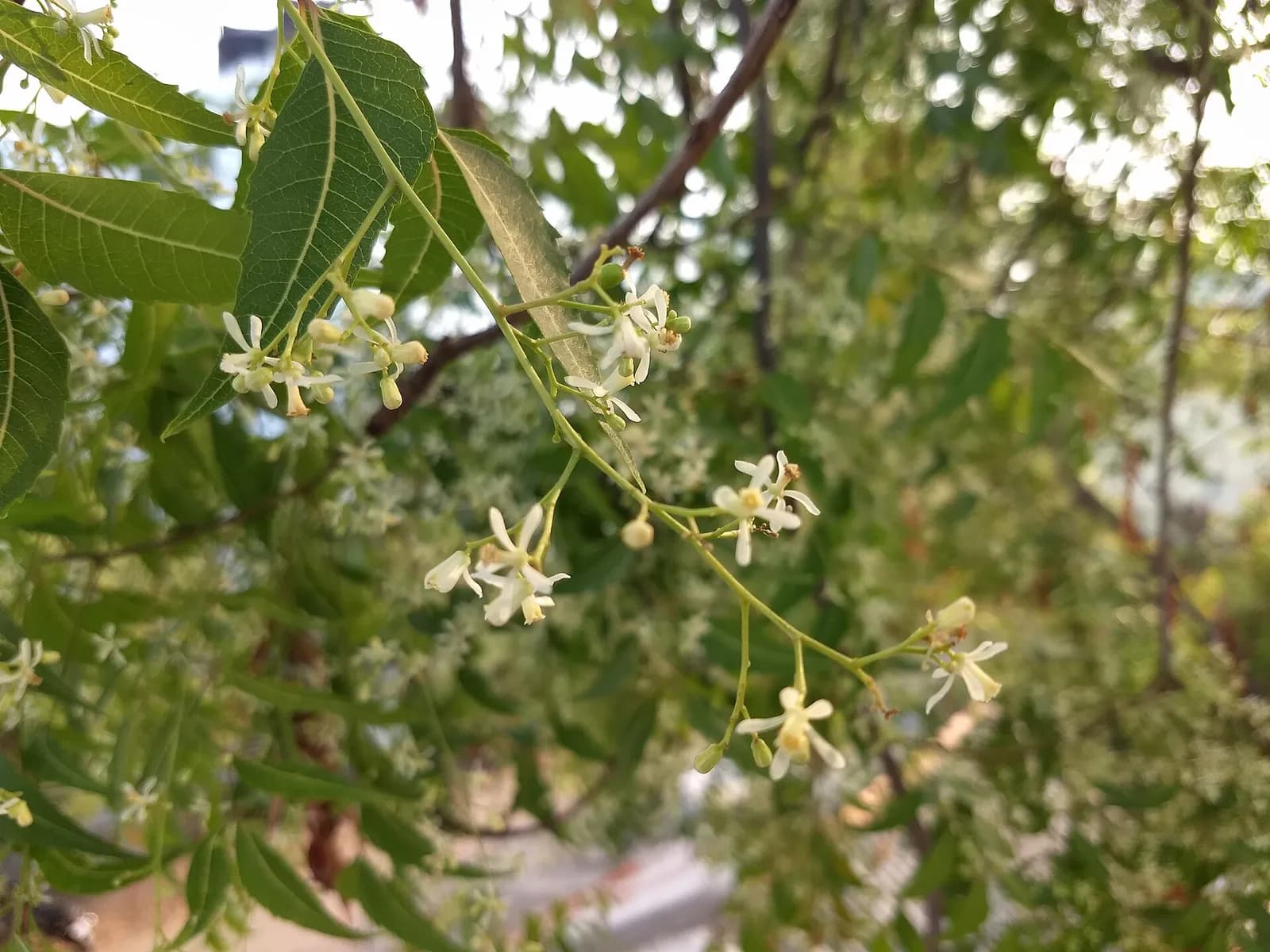
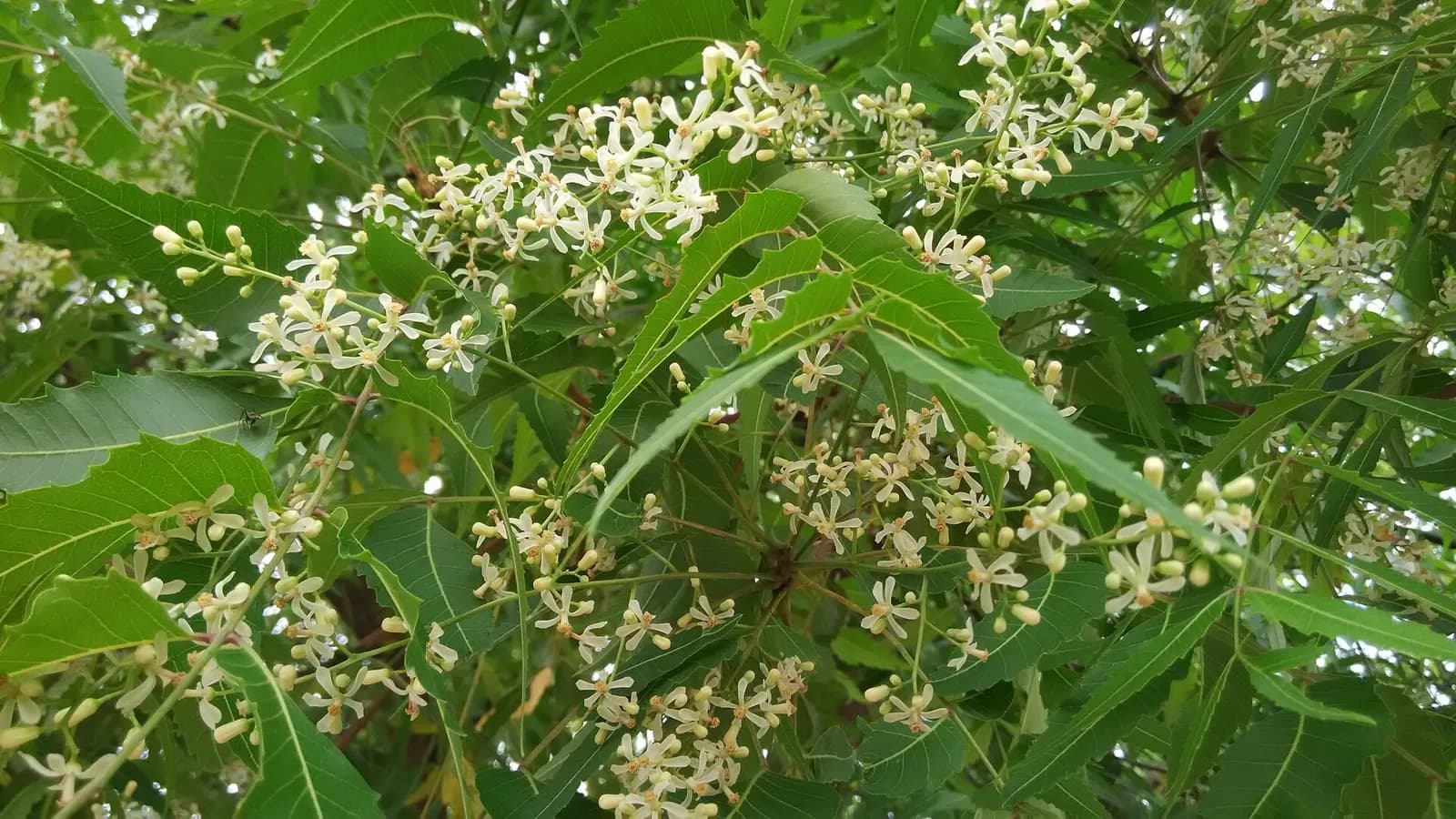
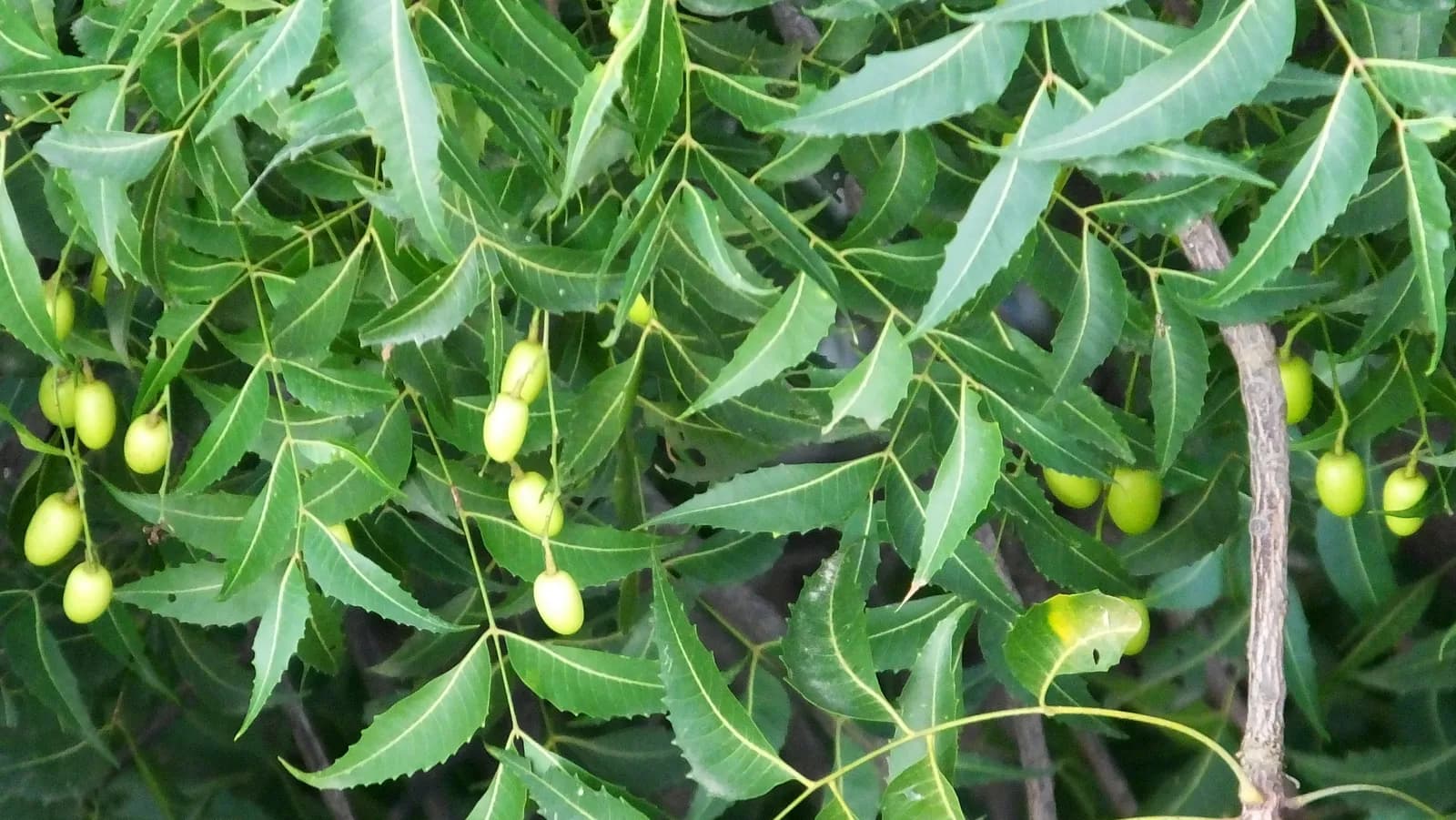
The neem is Azadirachta indica, a tree with a rounded spreading crown. The leaves are alternate, pinnate, up to forty centimetres, with twenty to thirty dark green leaflets. A single panicle may bear up to two hundred and fifty flowers, and out of them ripen smooth drupes resembling olives. The tree comes from India and Burma and grows all over the country by the roads and the houses; in the state of Andhra Pradesh the neem has been chosen as the state tree.
Neem: the flower, the leaf and the seeds
Sources
We build Vrajapedia together – with stories, verses, photographs and parikrama experience. If you know something more, tell us and it will appear on this page.