Bakula (Maulsari)
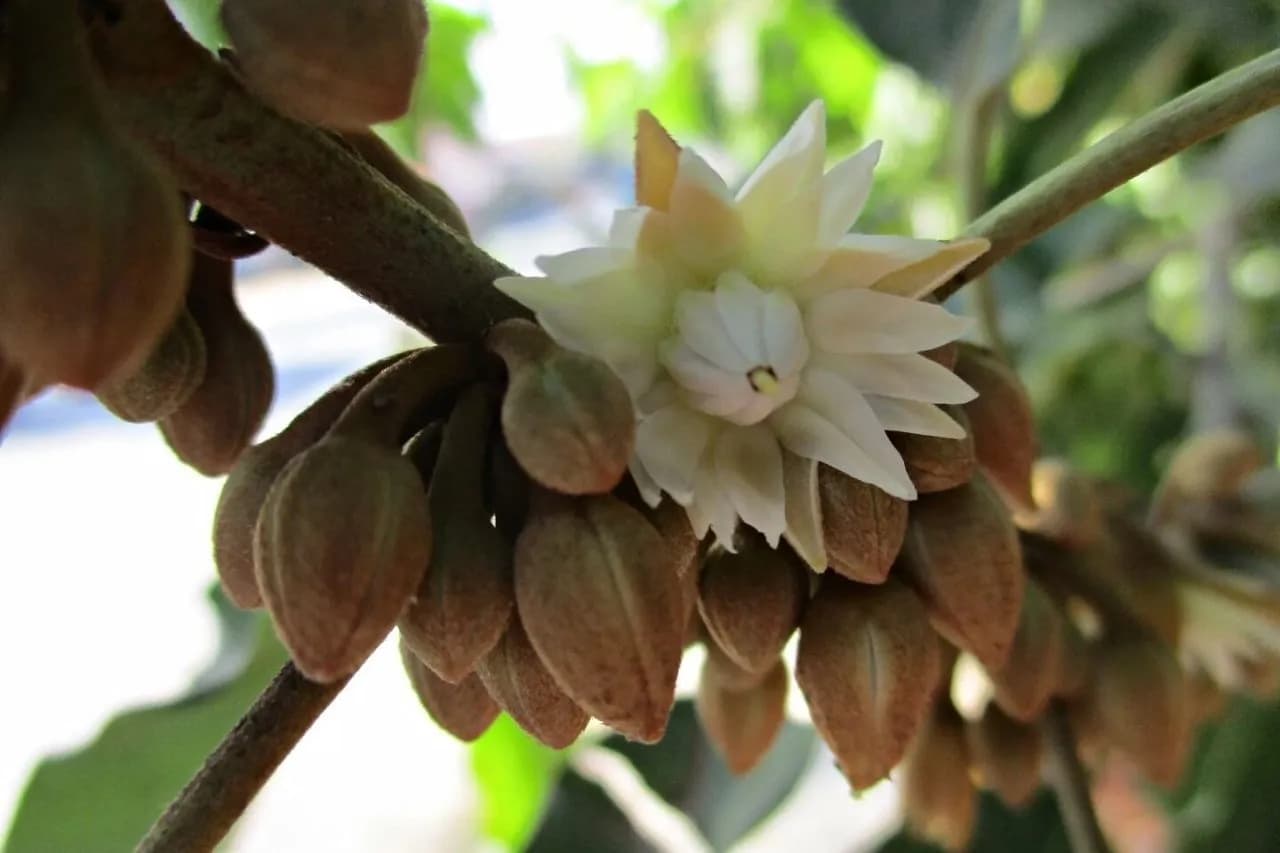
When the gopis, maddened by separation, roam frantically through the night forest, asking every tree on the bank of the Yamuna about Krishna, the bakula stands among those they call out to. It is a tree with a dense shady crown and small star-shaped flowers whose honey-like fragrance fills the whole forest by evening and lingers even in fallen, withered blossoms – small wonder that in Sanskrit it is called sthira-kusuma, “the steadfast flower”. In Vraja its blossoms are woven into garlands and hair adornments for Krishna, double rows of these trees line the paths to the meeting place of Radha and Krishna, and the poets count its flower among the five arrows of the god of love.
The Tree in Vrindavan
In the thirtieth chapter of the Tenth Canto of Srimad-Bhagavatam, the gopis, having lost Krishna in the midst of the rasa dance, wander through the forest mad with separation, asking every living thing about Him. They call out to everyone in turn – first the ashvattha, plaksha, and nyagrodha, then the flowering ashoka, naga, and champaka, then tulasi and the jasmines – and last of all they address the great fruit trees on the bank of the Yamuna, among which stands the bakula:
cūta-priyāla-panasāsana-kovidāra-
jambv-arka-bilva-bakulāmra-kadamba-nīpāḥ
ye 'nye parārtha-bhavakā yamunopakūlāḥ
śaṁsantu kṛṣṇa-padavīṁ rahitātmanāṁ naḥ
“O cūta, O priyāla, O panasa, āsana and kovidāra, O jambu, O arka, O bilva, bakula and āmra, O kadamba and nīpa and all you other plants and trees living by the banks of the Yamunā who have dedicated your very existence to the welfare of others, we gopīs have lost our minds, so please tell us where Kṛṣṇa has gone.”
Why the Gopis Trust the Trees
Why do the gopis trust the trees? The commentators – Sridhara Svami, Jiva and Sanatana Gosvami, Visvanatha Cakravarti – all explain it the same way: the trees on the bank of the Yamuna stand motionless, like sages absorbed in meditation, and their stillness shows that their minds are fixed on Krishna. Such beings will not lie. What is more, their very existence is parartha, “for the sake of others”: they feed everyone with their fruits and shelter everyone with their shade, and so out of compassion they will point the way. That is why the gopis do not ask them “have you seen Him?” – a question the trees, as Krishna's servants, dare not answer – but only beg them to show the path. In this list the bakula stands alongside the kadamba and the mango. And here, commenting on this verse, Vamsidhara explains that the bakula is the very tree popularly known as maulsari1.
In Vraja the bakula grows not singly but in avenues and groves. In the Govinda-lilamrita of Srila Krishnadasa Kaviraja Gosvami, the paths leading from the Yogapitha – the heart of Vrindavan – to the bathing ghats of the Yamuna are lined with bakula trees on both sides, and it is along such an avenue, between its two rows, that Krishna walks to meet His beloved:
kṛṣṇo'py ārād bakula-viṭapi-śreṇī-yugmāntarādhvany
āgacchantī priya-sahacarī-veṣṭitāṁ vallabhāṁ tām
“And Krishna, walking down the middle of the road between the double row of bakula trees, saw His beloved approaching, surrounded by her dear companions; but though love surged within Him, He did not believe His eyes: too often before had His vision deceived Him.”
Bakula Groves
In those same gardens a jeweled swing hangs from two bakula trees at the northern edge of the pond, and navamalika vines twine around their trunks. Srila Rupa Gosvami, in his drama Vidagdha-madhava, describes Krishna entering a bakula grove: “Friend, this grove is simply magnificent! Look: to the right is a shimmering lake, to the left a pond and little streams. This forest of bakula trees, full of murmuring brooks and cool pools, delights Me greatly.”
And Srila Visvanatha Cakravarti Thakura, in the Krishna-bhavanamrita, describes Radha entering just such a grove: “stepping ever so slowly, striving to hold on to a composure that had already slipped away, She entered the bakula forest”2.
The bakula also stands on the banks of Radha-kunda and Shyama-kunda. Srila Raghunatha dasa Gosvami, in the Vraja-vilasa-stava, lists the trees there – champaka, young ashokas, mangoes, the lavanga and madhavi vines, and bakula – and calls these groves the Divine Couple's favorite place of pastimes. And the bees, he adds, humming softly among the mango, kadamba, and bakula trees, delight Radha and Krishna with their very hum.
Bakula-sakhi
The bakula also lends its name to one of Radha's maidservants in Vraja. In the Govinda-lilamrita and in the Ananda-Vrindavana-champu of Kavikarnapura, Bakula-sakhi, also known as Bakula-mala, weaves garlands3.
“Meanwhile, Radhika was sitting in a secluded place with Her intimate friends Lalita and Vishakha. The unbearable weight of Her love for Krishna was pressing upon Her heart. Suddenly the flawless Shyama-sakhi appeared there, along with the sakhi Bakula-mala, who was carrying a garland of bakula flowers.”
It is to her that Krishna gives His instructions about His attire for the dance:
“O Bakula! Bring the red turban, the golden jacket, the multicolored wrap, and the four kinds of garments worn in Vraja, and smooth out the rauchika dance garments, skillfully embroidered with strong threads of many colors!”
Spring, Kama's Arrows, and Flowers in the Hair
Through the bakula, spring and the god of love also enter the poetry of Vraja. In the Gita-Govinda, Srila Jayadeva Gosvami paints a spring forest languid with passion, where not a spot is left bare on the blossoming branches and swarms of bees hum frantically over the clusters of bakula:
ali-kula-saṅkula-kusuma-samūha-nirākula-bakula-kalāpe
viharati harir iha sarasa-vasante...
“...swarms of bees hover over the countless flowers crowding the clusters of bakula. And there, in that lush spring forest, Hari enjoys His games of love. Alas, how am I to keep my patience?”
Kamadeva's Arrows and Adornment
The bakula flower stands among the five flower arrows of Kamadeva as well. The Sanat-kumāra-saṁhitā, which Srila Vishvanatha Chakravarti Thakura quotes in his Mantrārtha-dīpikā, gives each letter of the kāma-bīja, the syllable klīṁ, its own flower: ka – the mango bud (āmra-mukula), la – the ashoka, i – the mallika, the crescent ardha-candra – the madhavi, the dot bindu – the bakula4. The commentary on the Gita-Govinda says that Kamadeva does not own these arrows: he borrows them from Radha and conquers the universe only by Her mercy.
The flowers themselves serve Him too. In the Govinda-lilamrita, the forest presents Radha with a necklace of quivering bakula flowers, and Radha adorns Krishna's hair with them, mixed with jati, yuthika, and golden yuthi. In the Ananda-Vrindavana-champu, bakula, keshara, and nagakeshara are woven into belts for the gopis, and bakula flowers adorn Krishna's dark curls. During Holi, Vrinda lays a garland of bakula along Radha's hair parting – “as if kissing Her forehead”. And in the scene where the gopis search for Krishna, they call out to the tree itself: “O bakula! You are blissful, beholding moon-faced Hari, who has himself woven a garland from your fallen flowers.”
Worship
Bakula flowers are offered to the Lord. In the Hari-bhakti-vilasa, Srila Sanatana Gosvami gathered a whole collection of statements on this from the Puranas:
Those who worship the Lord of the universe by offering bakula and ashoka flowers will dwell in the abode of Vishnu for as long as the sun and the moon rise and set.
There, bakula is also named among the best flowers for the worship of Sri Govinda, and offering it together with mallika, malati, and punnaga is said to equal the gift of ten gold coins for each flower. It may be offered even when withered. Its fragrance, too, has its place: anointing the Lord's body with the essence of bakula flowers bestows the fruit of a great sacrifice5. Bakula is likewise mentioned in the morning meditation on Vrindavan prescribed by the same book – among the trees whose branches bend under the weight of their flowers.
Gaura-lila
Bakula also has its place in the pastimes of Lord Chaitanya. In Jagannatha Puri, Sri Chaitanya Mahaprabhu visited Haridasa Thakura every day and, to shield him from the sun, planted a toothpick that Lord Jagannatha had used. It grew into a large, shady bakula tree. Beneath it Haridasa Thakura chanted his three lakhs of holy names; here, too, Srila Rupa Gosvami recited Lalita-madhava and Vidagdha-madhava before Mahaprabhu and the devotees, and after Haridasa Thakura's passing, Lord Chaitanya danced under this tree with his body in His arms. The tree is worshiped to this day – under the name Siddha-bakula.
A bakula also stands in Navadvipa, in the courtyard of Srivasa Thakura, where Mahaprabhu held His nighttime kirtans:
“It was Ekadashi, and the Vaishnavas were performing kirtan on a large raised platform beneath the bakula tree in Srivasa-angana. Some, sighing heavily, exclaimed: “Ha Gauranga! Ha Nityananda!”
The Flower of Vaikuntha
Bakula also has its place in Vaikuntha. In the Third Canto of Srimad-Bhagavatam, when the four Kumaras enter the spiritual kingdom, bakula is named among its fragrant flowers:
mandāra-kunda-kurabotpala-campakārṇa-
punnāga-nāga-bakulāmbuja-pārijātāḥ
gandhe 'rcite tulasikābharaṇena tasyā
yasmiṁs tapaḥ sumanaso bahu mānayanti
“Although flowering plants like the mandāra, kunda, kurabaka, utpala, campaka, arṇa, punnāga, nāgakeśara, bakula, lily and pārijāta are full of transcendental fragrance, they are still conscious of the austerities performed by tulasī, for tulasī is given special preference by the Lord, who garlands Himself with tulasī leaves.”
Visvanatha Cakravarti observes that even the flowers and trees of Vaikuntha are pure devotees, free from any trace of rivalry or envy; they glorify not their own fragrance but the feat of tulasi. Srila Sanatana Gosvami quotes the same verse in Brihad-bhagavatamrita when describing the beauty of the spiritual world. And beyond the heavenly gardens, bakula also blooms on Kailasa, the abode of Lord Shiva.
Ayurveda
In the Ayurvedic compendia, bakula (Mimusops elengi) is placed in the flower group – the Bhavaprakasha assigns it to the pushpa-varga, and the Dhanvantari Nighantu to the amradi varga. Its rasa (taste) is astringent and pungent, its virya (potency) cooling, its vipaka (post-digestive effect) pungent, and its quality heavy (guru); it pacifies pitta and kapha. Bakula is famed above all as a remedy for the mouth and teeth: a decoction of its bark is used to rinse the mouth for inflamed gums, loose teeth, and ulcers; the tender leaves are chewed for bleeding gums; and the powdered bark serves as a tooth powder.
Botany
Bakula is Mimusops elengi of the Sapotaceae (sapodilla family), a tree with a straight trunk and a crown so dense that deep shade holds beneath it. The leaves are small, glossy, and leathery, oval with pointed tips and slightly wavy margins, five to sixteen centimeters long. The fruit is a pointed drupe, two to three centimeters long, that turns red as it ripens; the yellow flesh is edible. Bakula is native to a range stretching from southern India and Sri Lanka through Southeast Asia to the Pacific islands; in Bengal it is called bakul, in Kerala elengi, and in Telugu pogada.
Bakula (Maulsari) in bloom
Sources
We build Vrajapedia together – with stories, verses, photographs and parikrama experience. If you know something more, tell us and it will appear on this page.


