Madhavi
A vine of spring that needs a tree: by itself it will not rise, only by embracing. In its name one hears Madhava – both the spring and Krishna Himself. That is why in Vraja the madhavi is read as an image of Radha: the vine winds about the dark tamala as Radha embraces Krishna. And its thickets on the bank of the Yamuna close into bowers where Krishna plays His flute.
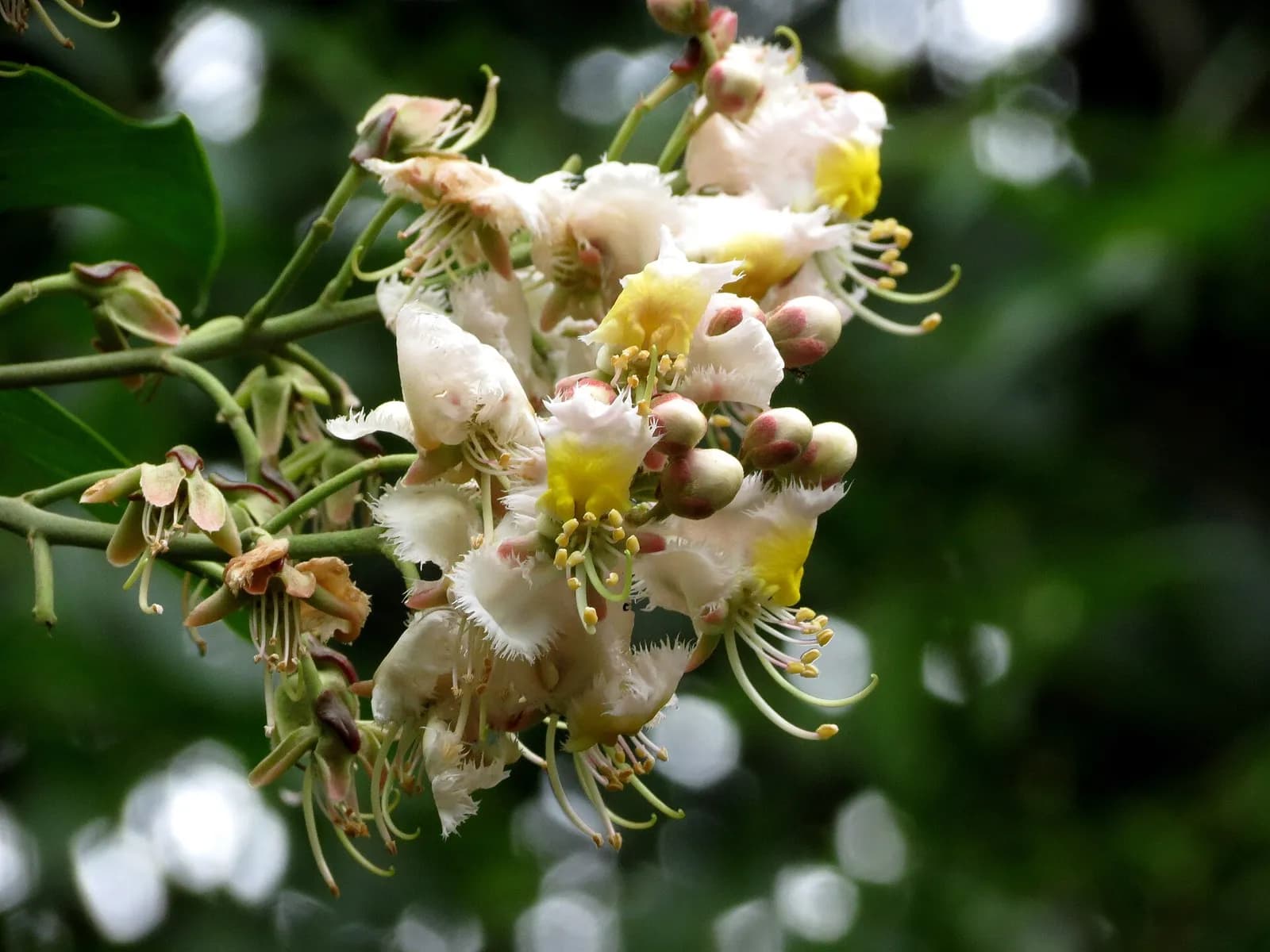
Madhavi in Vraja
Everything begins with the name. Madhava is both the month of spring and one of the names of Krishna; madhavi is the same word in the feminine, “she who belongs to Madhava”. Sanskrit poetry long ago made this vine the flower of spring: until Madhava the spring comes, the madhavi stands unopened, and at his coming it covers itself all at once with fragrant clusters.
And the Gaudiya poets heard a second meaning in this. Srila Kavikarnapura in the Ananda-Vrindavana-champu says it so: only with Madhava the spring does the madhavi vine give its sweet flowers – as Radha opens only beside Krishna. True, it is not the only one that blooms in spring, and Srila Rupa Gosvami admits it: in the Vidagdha-Madhava Vrinda-devi notes that at Madhava's coming all the vines break into bloom – and yet she singles out the one that bears His very name.
In Vraja the madhavi is above all the vine of trysts. Its dense fragrant thickets close into the madhavi-mandapa, a living tent in which Radha and Krishna meet. Srila Prabodhananda Sarasvati calls one to remember the Divine Couple precisely there:
kālinda-tanayā-taṭe madhura-mādhavī-maṇḍape
milan-malaya-mārute madhupa-jhaṅkṛtālaṅkṛte
pikāli-kula-kūjite vraja-kalāvatī-pūjite
kiśora-sahasī sadā smarata gaura-nīlākṛtī
“Remember always the fair and dark youthful Couple – in the lovely bower of madhavi vines on the bank of the Yamuna, fanned by the Malaya wind, adorned with the humming of bees and the calls of cuckoos, honoured by the skilful maidens of Vraja.”
In that bower everything comes together: the warm southern wind, the bees, the cuckoos – and in the midst of them the Couple. The same image is taken up by the Padyavali:
mādhavo madhura-mādhavī-latā-maṇḍape
paṭur aṭan madhuvrate sañjagau śravaṇa-cāru
gopikā-māna-mīna-baḍiśena veṇunā
“Wandering in the sweet bower of madhavi vines, full of bees, the skilful Madhava played on His flute a music that caressed the ear – the hook that catches the fish of the gopis' hearts.”
Bowers with Addresses
These bowers have exact addresses as well. Srila Krishnadasa Kaviraja Gosvami in the Govinda-lilamrita places in the north-eastern corner of the kunja of Lalita a whole chamber of madhavi trees, laid out in the form of an eight-petalled lotus, and calls it Madhavananda-da, “the giver of bliss to Madhava”. Another bower, by Radha-kunda, is built of four champakas wound about with madhavi.
Tradition knows too who tends these kunjas: in the kunja of Vishakha the madhavi is served by the manjari of Srila Jiva Gosvami, and in the kunja of Lalita by the manjari of Srila Rupa Gosvami.
Madhavi as an Image of Radha
The madhavi is a vine: it cannot stand by itself, and to live and to flower it must wind about a tree. In this was seen the image of Radha beside Krishna – of a love that holds by embracing. The Amarakosha knows the madhava as the month of spring and the madhavi-lata as the vine of spring, but these words stand in different sections of it: into the pair “Krishna and Radha” they were brought together by the poets of Vraja.
All the poets of Vraja come back to this image. Srila Jayadeva Gosvami in the Gita-Govinda paints the mango trees trembling into fresh buds at the embrace of the restless madhavi vines1. Srila Krishnadasa Kaviraja Gosvami draws it all into one line: the madhavi shines embraced by Madhava, and Madhava shines with the vine in bloom, and the whole world rejoices at their union2. And Srila Raghunatha dasa Gosvami, in his list of the names of Radha, writes: submissive to Madhava, in this world She is called Madhavi, the beloved of Madhava3.
On this image rests the best-known prayer about the madhavi. Srila Rupa Gosvami in the Utkalika-vallari, looking at a tamala wound about with a golden vine, addresses them as the living Couple – the tamala-Govinda and the madhavi-Radha:
mādhavyā madhurāṅga kānana-pada-prāptādhirājya-śriyā
vṛndāraṇya-vikāsi-saurabha-tate tāpiñccha-kalpa-druma
nottāpaṁ jagad eva yasya bhajate kīrti-cchaṭā-cchāyayā
citra tasya tavāṅghri-sannidhi-juṣāṁ kiṁ vā phalāptir nṛṇām
“O beautiful, fragrant tamala – the wish-fulfilling tree that blossoms in the forest of Vrindavan, entwined by the madhavi vine, the royal goddess of this forest! O tree whose shade of glory shelters the world from its burning sorrows – what wondrous fruit do people gain at Your feet?”
The tamala here is Krishna, dark as a thundercloud; the madhavi is Radha, golden as the lightning upon it. Rupa Gosvami prays not to a tree and not to a vine, but to the Couple whom they present.
Separation
Let Krishna once go away – and the same vine turns into a token of longing. In the Uddhava-sandesha of Srila Rupa Gosvami, Radha in separation is called just that, “the restless madhavi vine”: Madhava the spring has gone, and she has nothing to hold to, no one to bloom for. There too Krishna sends from Mathura, through Uddhava, a request bitter and tender – not to look at those very bowers that witnessed their happiness:
“O girl with crimson lips, withered with grief! The son of Nanda humbly begs you: do not look at the madhavi bowers of Govardhana – the witnesses of our great joy in love.”
A bower that was the tent of meeting wounds most of all in separation.
Worship
The flowers of the madhavi go into worship as well. Srila Sanatana Gosvami in the Hari-bhakti-vilasa gives a long list of the flowers pleasing to the Lord, and among them is the atimuktaka; and in his commentary he explains briefly: atimuktakaṁ mādhavī-latā, “the atimuktaka is the madhavi vine”4.
This name itself, atimukta, means also “ever liberated” – and the Sanskrit commentary on the Govinda-lilamrita plays on it: a forest full of atimuktas is visited by those who seek liberation too5.
Chaitanya Mahaprabhu
There is a madhavi in the Gaura-lila as well. In Jagannatha Puri Sri Chaitanya Mahaprabhu, seized by the mood of Radha, searches the garden for the vanished Krishna and addresses the flowering shrubs and vines as She would:
tulasi, mālati, yūthi, mādhavi, mallike
tomāra priya kṛṣṇa āilā tomāra antike?
“O tulasi! O malati! O yuthi, madhavi and mallika! Krishna is very dear to you; therefore He must have come near you.”
The madhavi is named here in one row with the tulasi and the jasmines – among those whom Krishna loves, and whom it is therefore worth asking about Him.
Beyond Vraja
The fragrance of the madhavi is so strong that it troubles even those who would seem to be above all trouble. The Srimad-Bhagavatam itself says so (3.15.17), describing Vaikuntha: standing in the water, its residents scold the wind because with the scent of the honeyed madhavi flowers it turns even a steady mind from singing the glories of the Lord; Srila Vishvanatha Chakravarti Thakura adds in his commentary that this happens during their bathing.
The madhavi stands among the five flower arrows of Kamadeva as well.
This five comes from the exposition of the kāma-bīja, the syllable klīṁ. The Sanat-kumāra-saṁhitā, which Srila Vishvanatha Chakravarti Thakura quotes in his Mantrārtha-dīpikā, gives each letter of that syllable its own flower: ka is the mango bud, la is the ashoka, i is the mallika, the crescent ardha-candra is the madhavi, and the dot bindu is the bakula7. The same list, without the letter-by-letter reading, is given by Srila Bhaktivedanta Narayana Gosvami as well in his commentary on the Gita-Govinda, 3.12.
Another five, the lexical one, comes from the Amara-koṣa, 1.1.57–58: aravinda (lotus), ashoka, cūta (mango), navamallika and nilotpala (blue lotus) – “these five are the arrows of the Five-arrowed one”6. The madhavi is not in it.
So the lists do not quarrel: one counts flowers, the other reads a mantra, and in the mantra the madhavi answers to the crescent above the syllable.
Ayurveda
Ayurveda knows the madhavi under the name atimuktaka: so Vagbhata already calls it in the Ashtanga-hridaya-samhita. The leaves and the bark are what is used. In taste (rasa) they are counted pungent and bitter, in nature (virya) warming; they are used for cough, burning and thirst, for bilious disorders and inflammation, for chronic skin diseases, and also as a wound-healer.
Botany
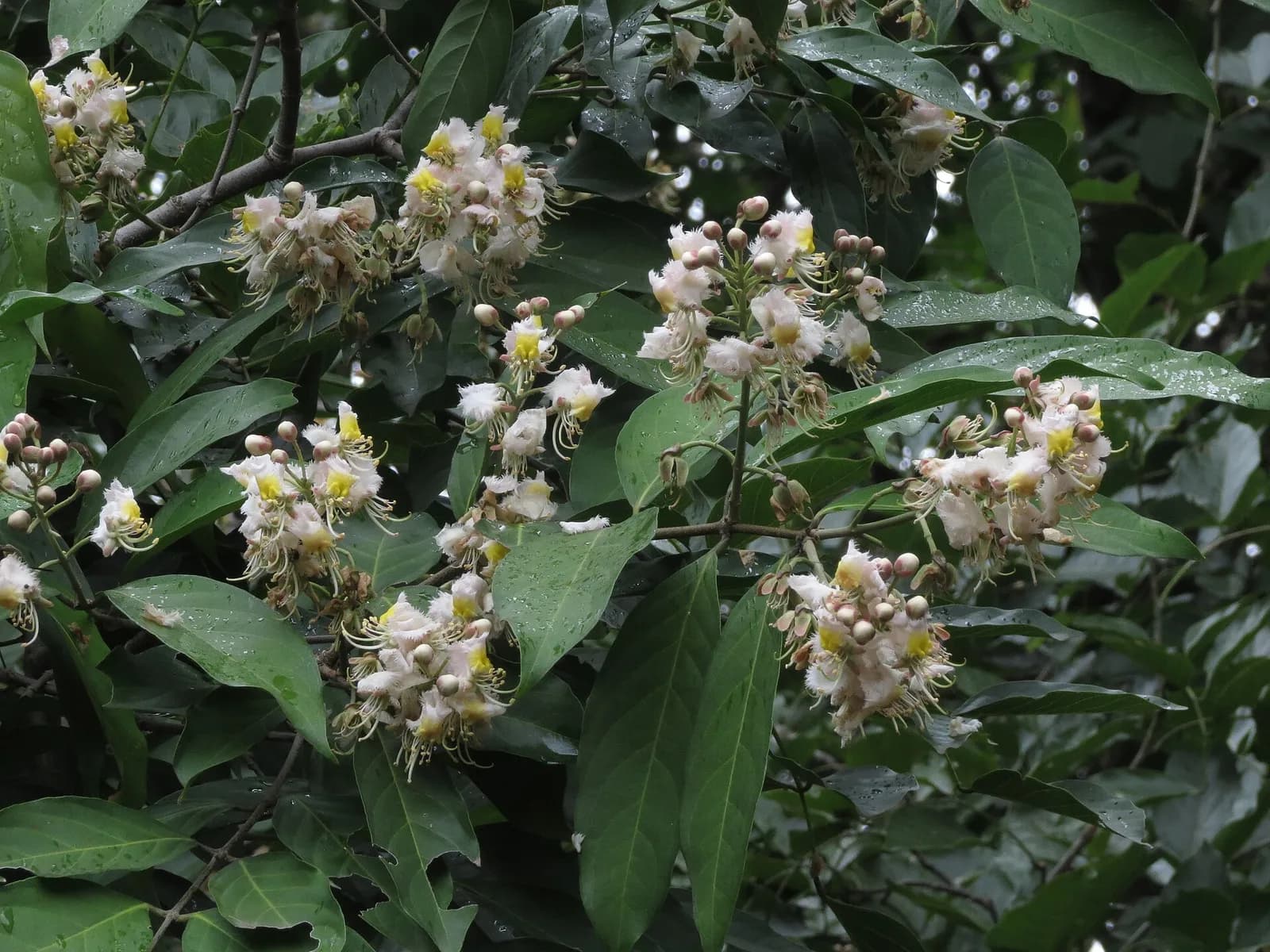
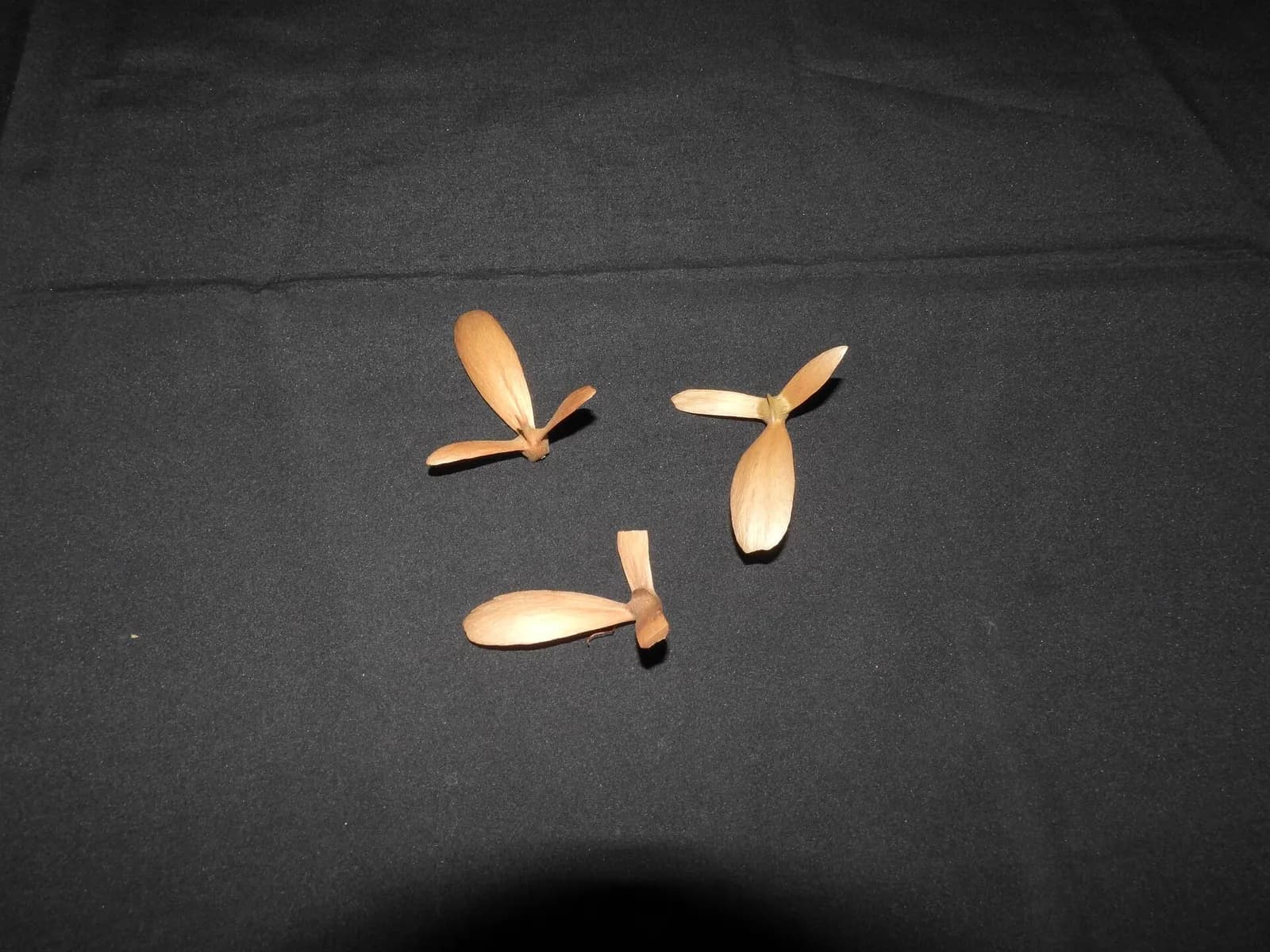
The madhavi is Hiptage benghalensis. Its shoots climb up trees, and the fragrance of its flowers is strong and almost fruity. It flowers, despite its name, not only in spring: botanists record flowering on and off all year round. The fruit is a dry samara with three spreading wings; from its flight comes the name of the genus, Hiptage, from the Greek for “to fly”. The madhavi is native from India and Sri Lanka to southern China and the Philippines.
The old Sanskrit lexicons know it under the names atimukta and vasanti – but they put another Latin name beside them, Gaertnera racemosa. That dispute is only apparent: in the present-day checklist of plant names kept by the Royal Botanic Gardens, Kew, Gaertnera racemosa is an unaccepted name, a synonym of the type variety of that same Hiptage benghalensis. The lexicons and the botanists speak of one plant.
Madhavi: the inflorescence and the shoots
Sources
We build Vrajapedia together – with stories, verses, photographs and parikrama experience. If you know something more, tell us and it will appear on this page.


