Devakanchana
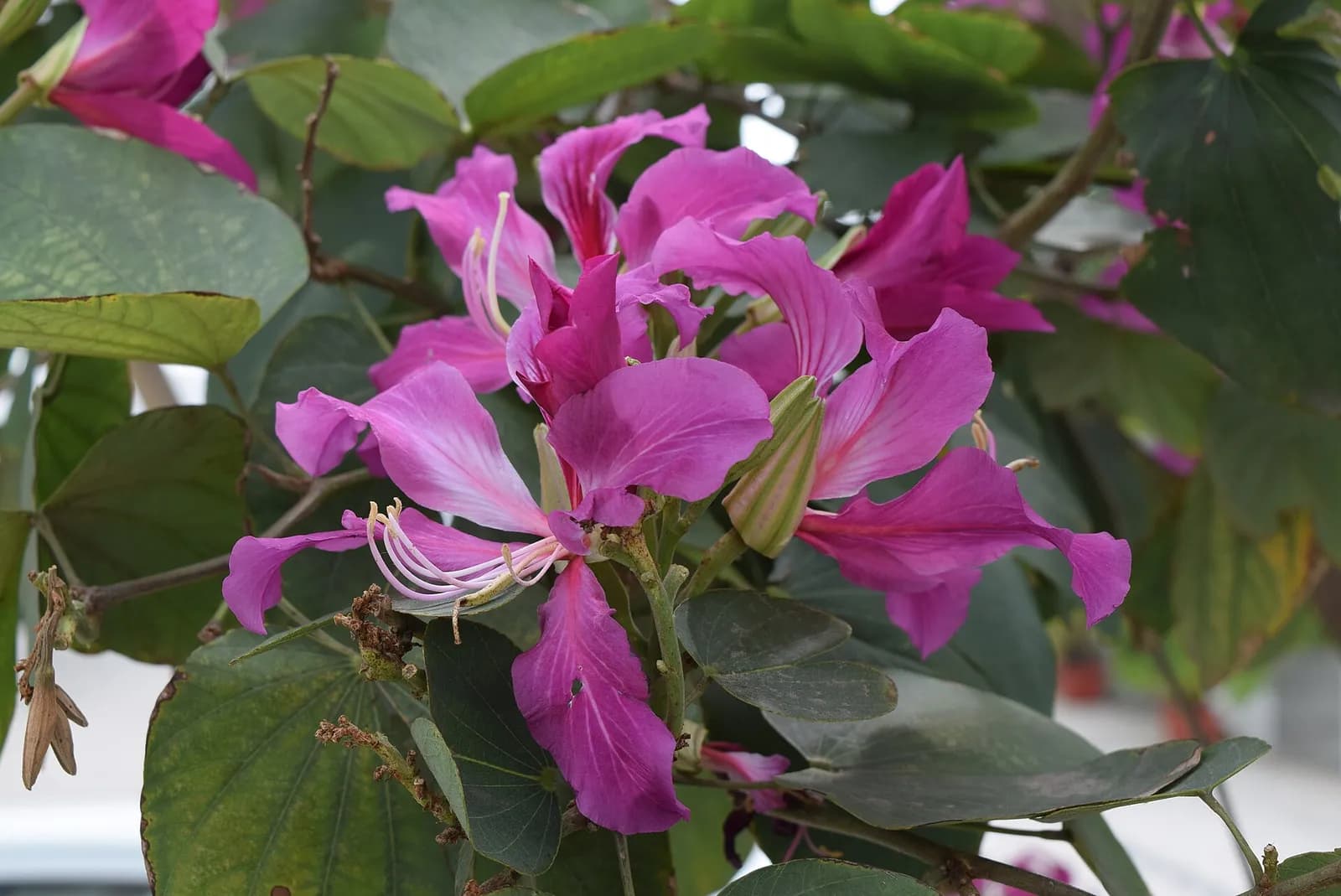
An orchid tree with large lilac flowers. Its name, devakanchana, means “the gold of the gods”. When Krishna vanished from the gopis in the middle of the dance, they, out of their minds with separation, rushed to question the trees on the bank of the Yamuna, and this tree they addressed too: its love for the Lord, in the poet's words, it had already betrayed by its crimson flowers.
The Tree in Vrindavan
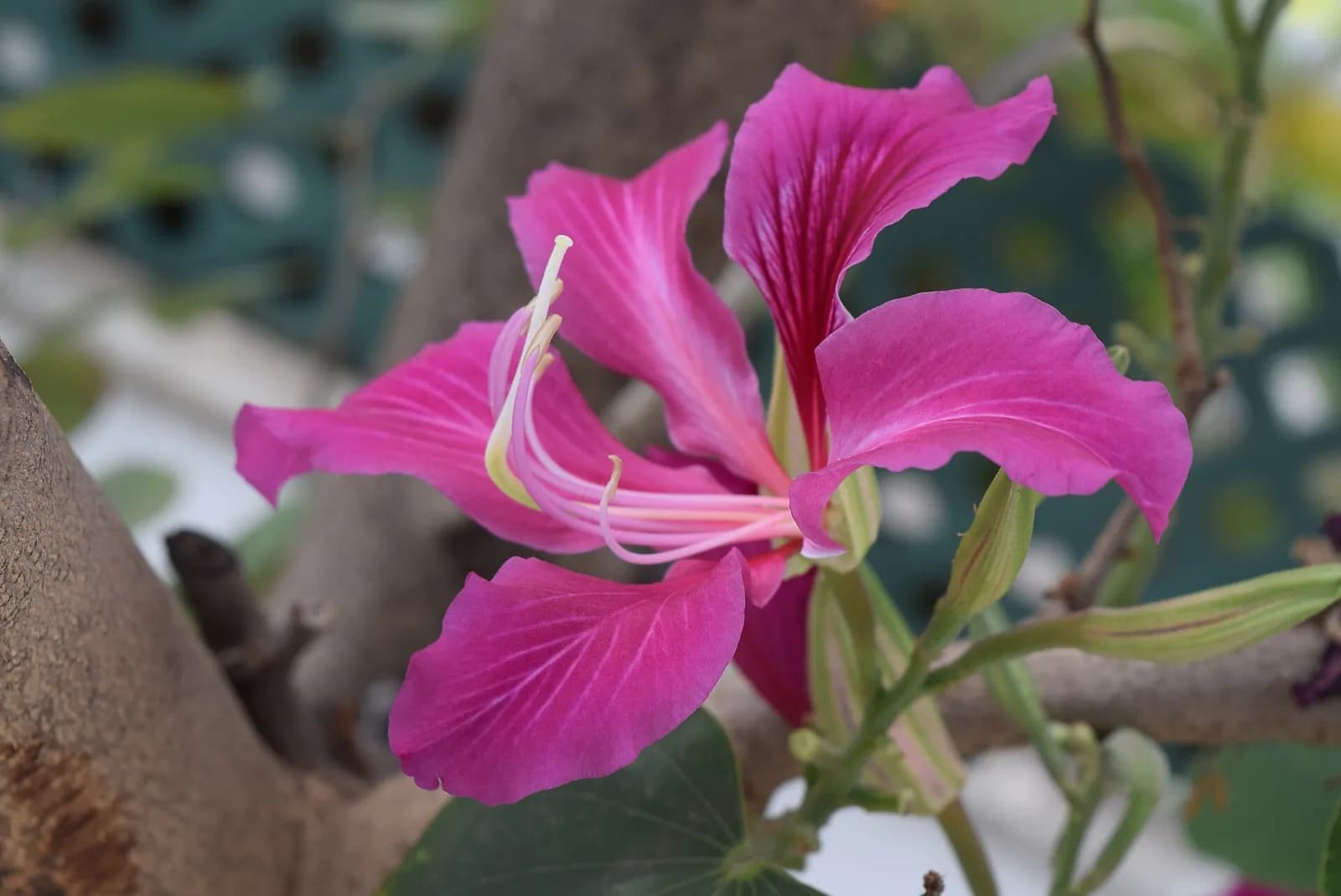
All across northern India this tree is called kaniyar, the red kachnar, and it is planted in gardens and along roads. In autumn it covers itself with lilac flowers so like orchids that one does not at once recognize a kinsman of the pea and the acacia. Botanists gave it the name Bauhinia purpurea, the purple bauhinia, while in Sanskrit it is devakanchana, “the gold of the gods”, and raktakanchana, “the crimson kanchana”.
Sanskrit does not separate the two bauhinias the way botany does. Kanchanara, “the golden tree”, is the common name for both: for the white-flowered kovidara and for the red one. The commentators on the Bhagavatam agree that the kovidara of the verse about the trees of the Yamuna is a variety of the kanchanara, and in the exposition of the rasa-lila the raktakanchana is named after it – also one of the kinds of kanchanara1. So everything the shastras say of the kanchanara in general – from the verse in which the gopis implore the trees, to the buds in the kitchens of Vraja, to kanchanar guggul – is said of this tree as well; all of that is set out in detail in the article on the kovidara. Here is what, within that common ground, belongs to the red one alone.
And one turn belongs to it that is worth a whole lila. When the gopis, out of their minds with separation, wander the forest and implore the trees to say where Krishna has gone, Srila Kavikarnapura in the Ananda-Vrindavana-champu retells the scene playing on an echo: kovidara sounds almost like kovida, “one who knows, a learned man”. The gopis address the tree as a knowing witness – and at once catch it out:
“O kovidara! You are a learned tree – so tell us by which path Krishna has gone? For having seen Him, you could not hide your love: it has come out in crimson flowers.”
The Witness Betrayed by Its Colour
The witness gave itself away by its colour. A tree's love for the Lord cannot be hidden: it flares out on the branches in purple and crimson, like a blush. And this image falls precisely on the red kanchana – the white one has nothing to blush with.
It grows in more than one place in Vraja. In the Garga-samhita the kanchana stands among the trees of the Vrindavan groves on the bank of the Yamuna, whose beauty, in the sage's words, outshines the heavenly gardens of Nandana and Chaitraratha2. Through that same forest, past the groves of tulasi, kovidara and ketaki, Krishna goes through Kundavana to the forest of Kamavana, to His meeting with the gopis3.
Beyond Vraja
The kanchana is known beyond the banks of the Yamuna: Sanskrit descriptions of the heavenly gardens set it in the ranks of the trees of paradise – on the slopes of Kailasa, in the Ritumat garden on Mount Trikuta, in the forest of Mount Raivata near Dvaraka4. All these places are set out in the article on the kovidara: the name there stands as the common one, and it covers the red kanchana as much as the white.
Ayurveda
In Ayurveda the devakanchana is used on a par with the white kanchanara: the same astringent, cooling bark, the same fame as a healer of the glands, the same place in kanchanar guggul for indurations and goitre – all of it in detail in the article on the kovidara. The leaves and flowers of both go into food as well: in Vraja the unopened buds are made into “kachnar kali”, pakoras and sabji.
Botany
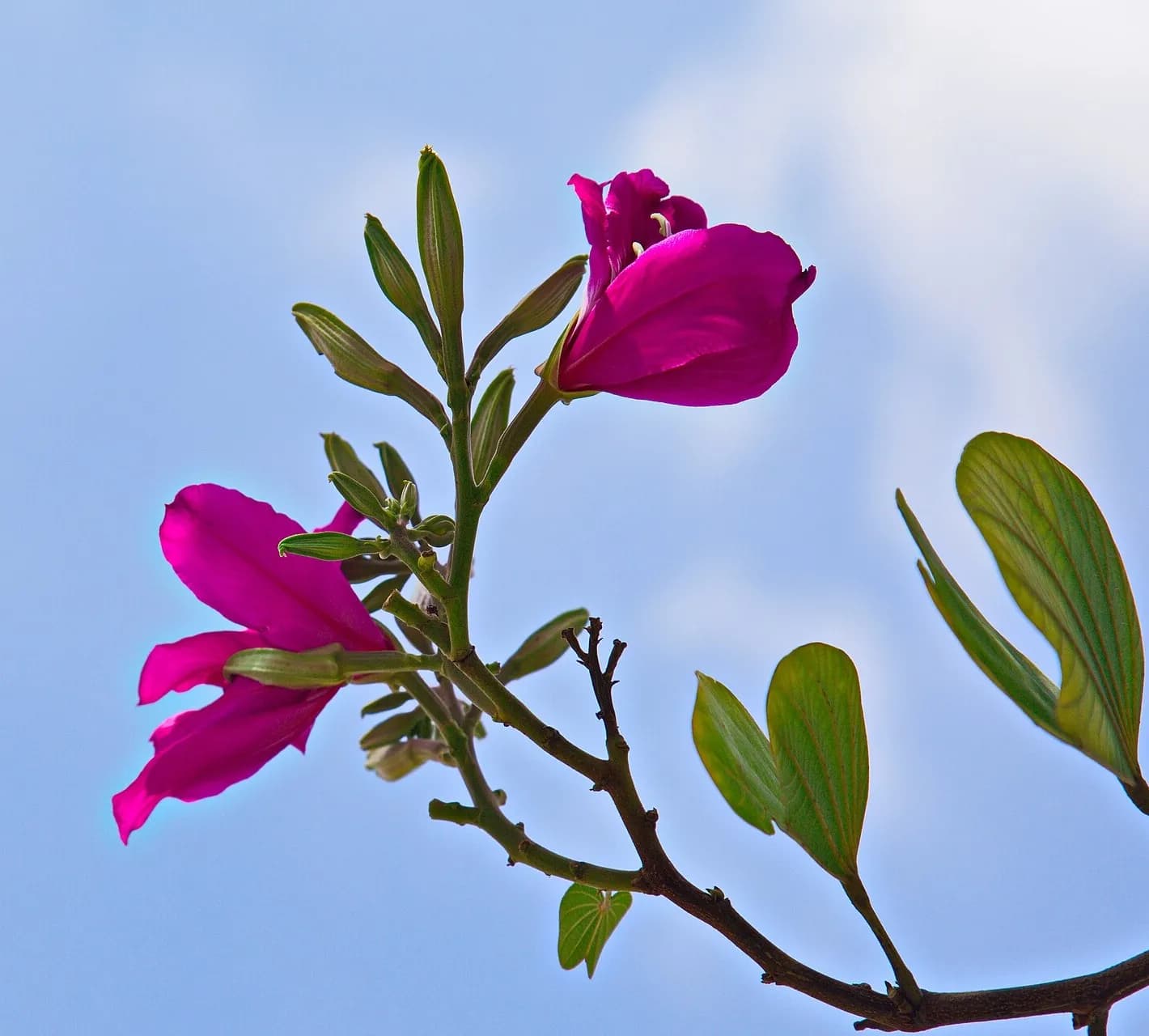
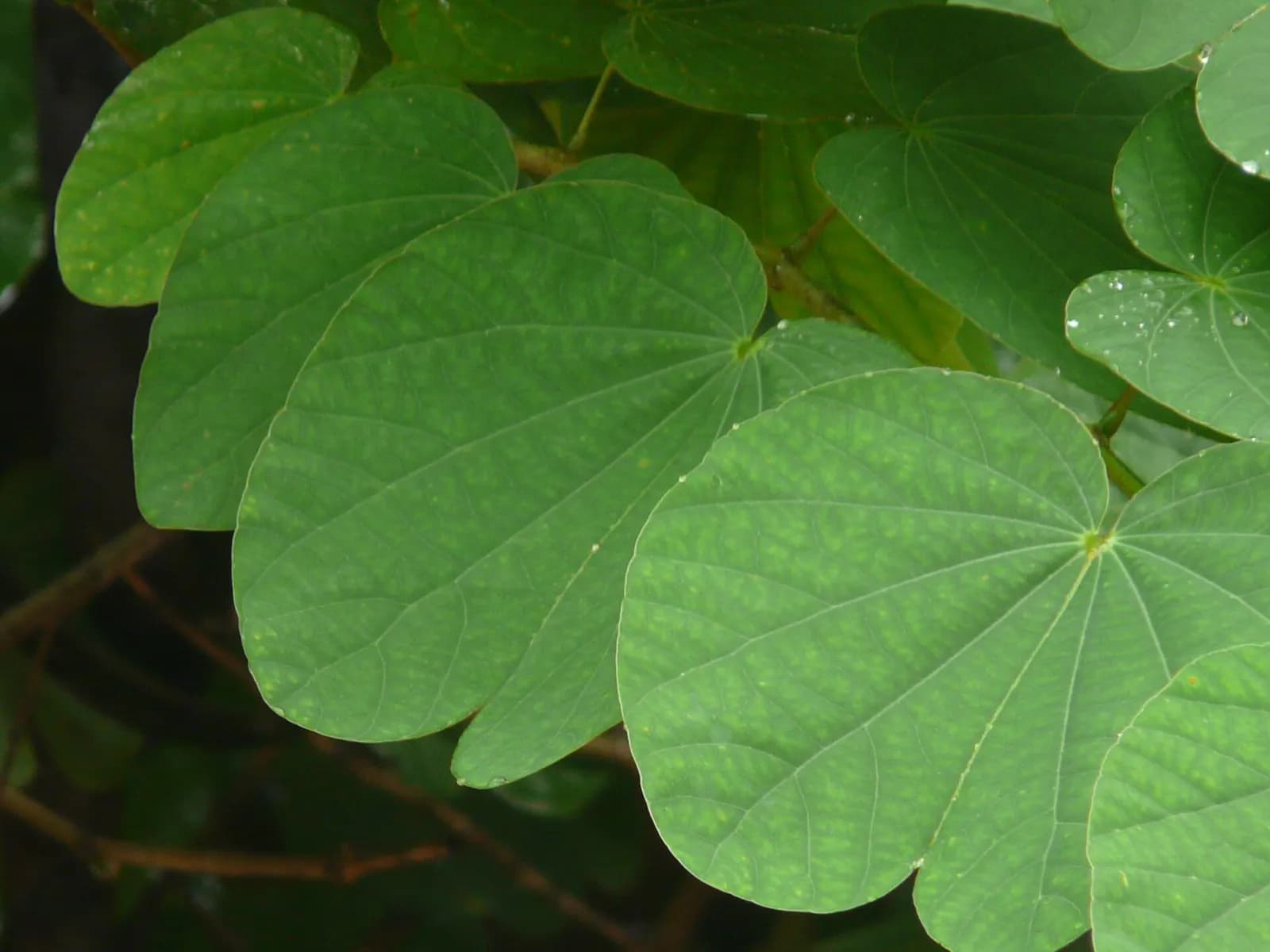
Bauhinia purpurea is a small deciduous tree whose leaf is split in two right down to the middle. Its five narrow petals do not overlap – and by this the purple bauhinia differs from its kinswoman the white kachnar (Bauhinia variegata), whose petals are broad and lie edge over edge. After the flowering, long flat pods stay on the branches, some thirty centimetres each, and hang there all winter. The tree is native to the Indian subcontinent and Myanmar; today it is planted for its flowers throughout the tropics.
Devakanchana: flower, shades, pod
Sources
We build Vrajapedia together – with stories, verses, photographs and parikrama experience. If you know something more, tell us and it will appear on this page.


