Vajradanti
A thorny shrub with yellow-orange flowers that comes into bloom in the forests of Vraja at the end of autumn, when almost everything else has finished flowering. In the scriptures it is known as jhinti (jhiṇṭī), and also as sahachara, “companion”: in the feminine, sahachari, the word means “girlfriend.” Hence the play on words the poets of Vrindavan love: naming the shrub in a verse, they speak at the same time of Radha’s companions.
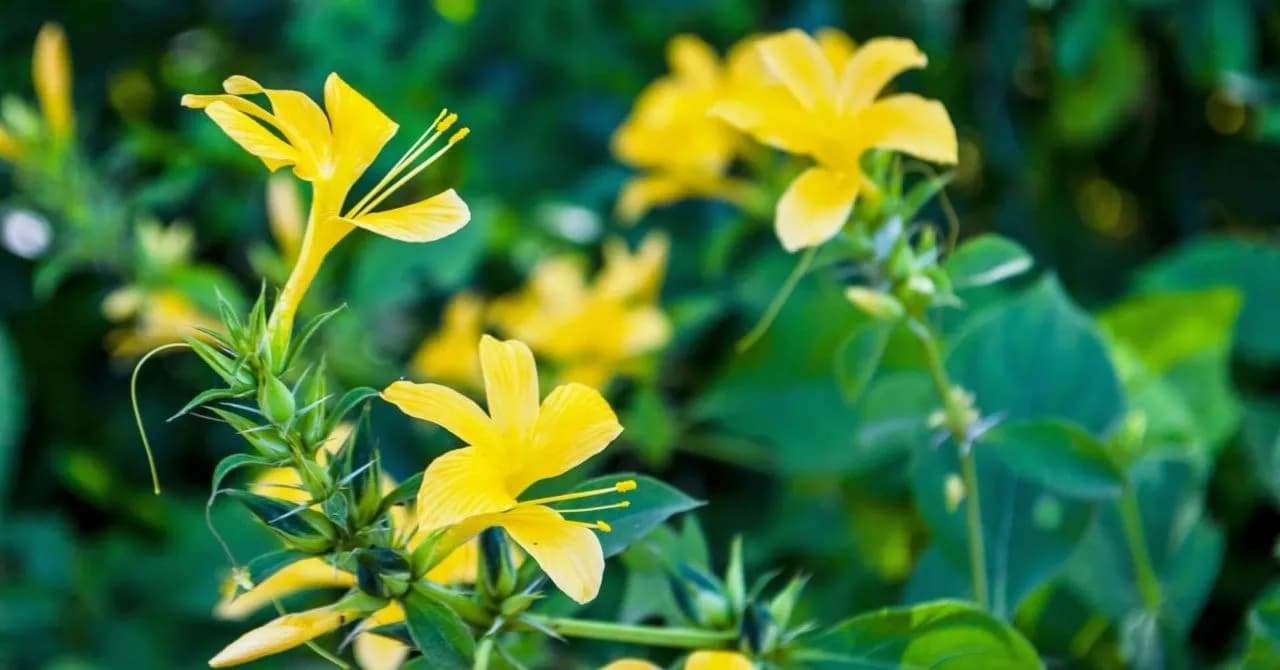
Vajradanti in Vrindavan
There is a season in Vraja when summer with its riot of blossom is long past, and the groves that once sheltered Krishna from the heat with dense shade stand half bare. This is hemanta — early winter, November and December. And it is then that the thorny jhinti bushes flare up in yellow-orange fire. Vrindadevi, the keeper of the forest, gathers them along with other flowers for Radha and Krishna: she comes out to meet Them on Their walk and offers “winter wraps” woven of fresh blossoms — red, tawny, blue and gold. Krishna takes the armful and, turning over the petals, reads in them the moods of His beloved:
kurubaka-ghaṭā jhiṇṭī-śreṇi kuruṇṭaka-maṇḍalair
hṛd atanu-tanūnāṁ te kānte yato dadhire rucaḥ |
tad adara-madāmodair eṣāṁ sadeha virājināṁ
nava-sumanasāṁ mālā mā lālasaty adhikaṁ na kiṁ ||
“Clusters of red kurabaka, rows of yellow jhinti, whorls of blue kuruntaka — all of them, My beloved, have taken on the colours of Your heart: red carries Your passion for Me, yellow the hue of Your body, blue the tremor of love in Your soul. Then how should a garland of these fresh flowers not kindle My longing all the more?”
And so the thorny shrub enters the pastime.
Jhinti is also among the flowers that Krishna’s cowherd friends gather for Him. In the Brihad-bhagavatamrita of Srila Sanatana Goswami they weave Him garlands from everything that blooms in Vraja: tulasi, malati, jati, mallika, kunda, kubjaka, clove, ketaki and jhinti, madhavi and two kinds of yuthika. Krishna puts these garlands on Himself and hands them out to His friends1.
The Second Name
The play is simply made: the verse has the word sahachari, and it can be taken two ways — as the jhinti shrub and as a companion of Radha. The poets use this constantly.
So in the Govinda-lilamrita of Srila Krishnadasa Kaviraja Radha’s companions look at the forest and recognise Her in it:
lasat-sahacarī-yuktā mattāli-nava-mālikā |
viśākhāli-kṛta-cchāyā vikasan-madanākulā ||
“Surrounded by Her radiant sahachari companions, She was like a forest full of sahachara bushes; in a jasmine garland with intoxicated bees circling it, like a forest of fresh jasmines; sheltered by Vishakha, like shade cast by spreading branches; overcome with love, like a forest full of blossoming madana.”
And elsewhere in the same poem the season of hemanta itself is compared to Krishna’s body, and the same word works again:2
sphurita-sahacarālī-veṣṭito 'mlāna-kāntis
tata-kusuma-dhanur mūrcchāli-gopī-pragītaḥ |
vikaca-kusuma-bāṇaḥ kṛṣṇa te deha-tulyo
mukharita-śuka-līlo bhāti hemanta-kālaḥ ||
“O Krishna, this season is as splendid as Your body: as You are surrounded by sahachara companions, so it is full of sahachara flowers; and as Shuka tells of Your pastimes without pause, so it rings with shuka parrots.”
The Word in Rupa Goswami
Srila Rupa Goswami himself weaves the word into a verse. In the sixth act of his play Vidagdha-madhava Krishna, glancing about in embarrassment, lets fall: “Why has the sahachari come into bloom?” — and turns at once to Lalita: “O lovely Lalita, come down from the mountain of your pride and give me your hand, for I have wandered into a deep thicket”3. One word holds both senses at once: the jhinti bush in bloom nearby — and the companion to whom the request is addressed.
Jhinti grows in the kunja of the sakhi Champakalata, where Guna Manjari serves — in the pastimes of Lord Chaitanya she comes as Srila Gopala Bhatta Goswami.
Worship
Vajradanti is among the flowers of worship as well. In the Hari-bhakti-vilasa Srila Sanatana Goswami cites from the Vamana Purana a long list of flowers fit for the service of Krishna and, explaining one of the names, remarks: the bana flower is a variety of jhinti4.
Srila Prabodhananda Sarasvati recalls it too: Vrindavan, he says in the Vrindavana-mahimamrita, is coloured with “many wondrous varieties of jhintika and fragrant bandhujiva,” beside ashoka, karnikara, atimukta and golden yuthika5. In the eternal dhama the sahachara is always in flower.
Ayurveda
Its name — “teeth as hard as the vajra” (vajra is the diamond and Indra’s thunderbolt, danti is teeth) — the plant justifies in practice: the ground stems and roots go into tooth powders and gum preparations, and to this day vajradanti is a name one recognises on Indian herbal toothpastes6.
Botany
The classical Sanskrit lexicons place vajradanti in the saireyaka group (the barlerias) and distinguish its varieties by the colour of the flower. The Amarakosha, as quoted in the commentary on the Govinda-lilamrita, lists: the red is kurabaka, the yellow kurakantaka, the blue jhinti; both the yellow and the blue are called bana, and also dasi and artagala, and “saireyaka is the same as jhinti”7. Different texts distribute these colours in their own way, but behind all the names stands one shrub with thorny shoots and bright flowers; the yellow-flowered vajradanti is the best known of them.
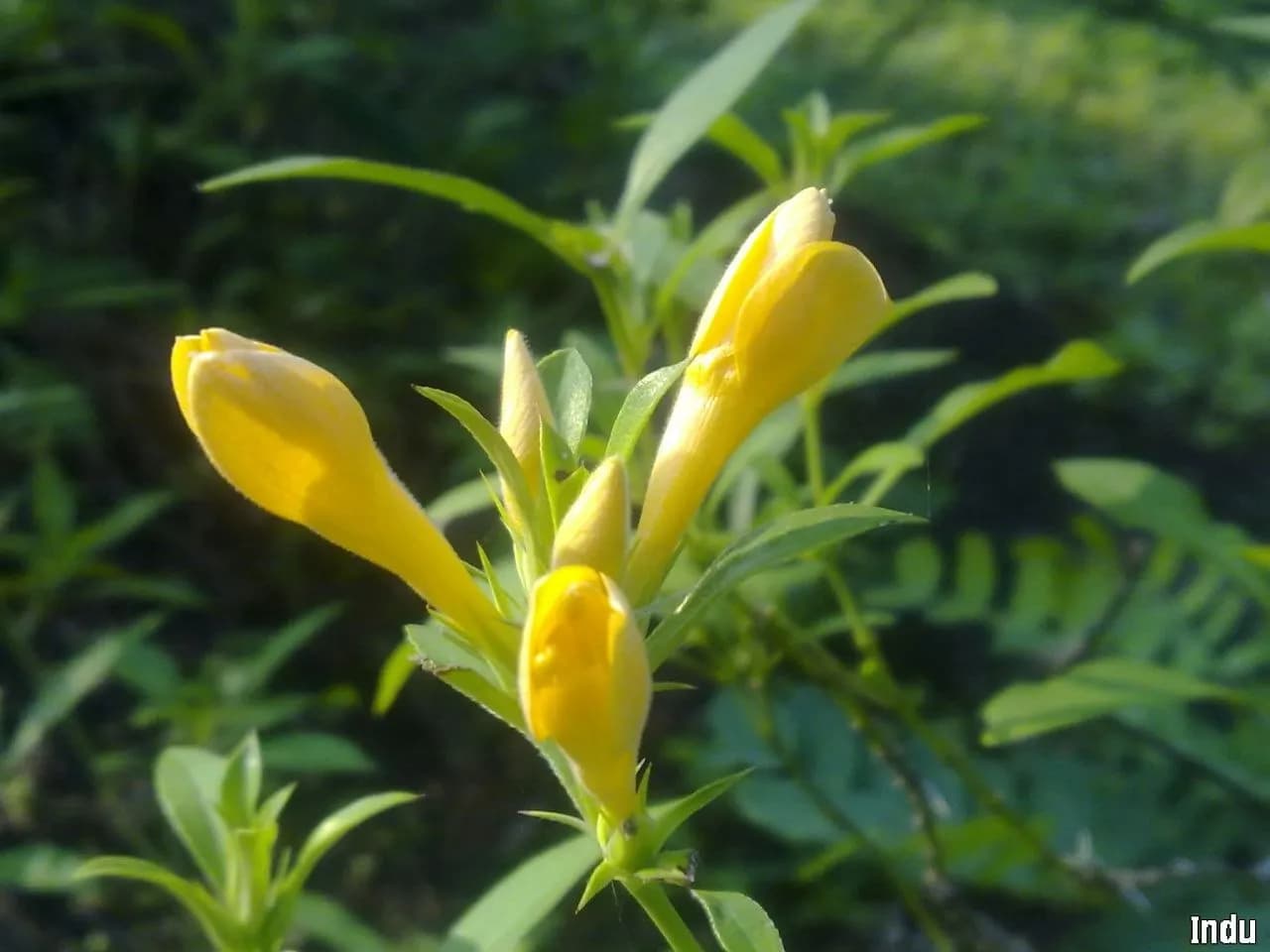
Barleria prionitis of the acanthus family (Acanthaceae) is an erect thorny shrub, usually single-stemmed, up to a metre and a half tall; sharp thorns about a centimetre long sit in the leaf axils — for them the plant was nicknamed the porcupine flower in English. The leaves are elliptical and pointed, five to nine centimetres, with fine hairs along the edge. The flowers are orange-yellow and sit in tufts in the leaf axils; the flower itself is about two centimetres, with a long tube.
Vajradanti in bloom
Sources
We build Vrajapedia together – with stories, verses, photographs and parikrama experience. If you know something more, tell us and it will appear on this page.


