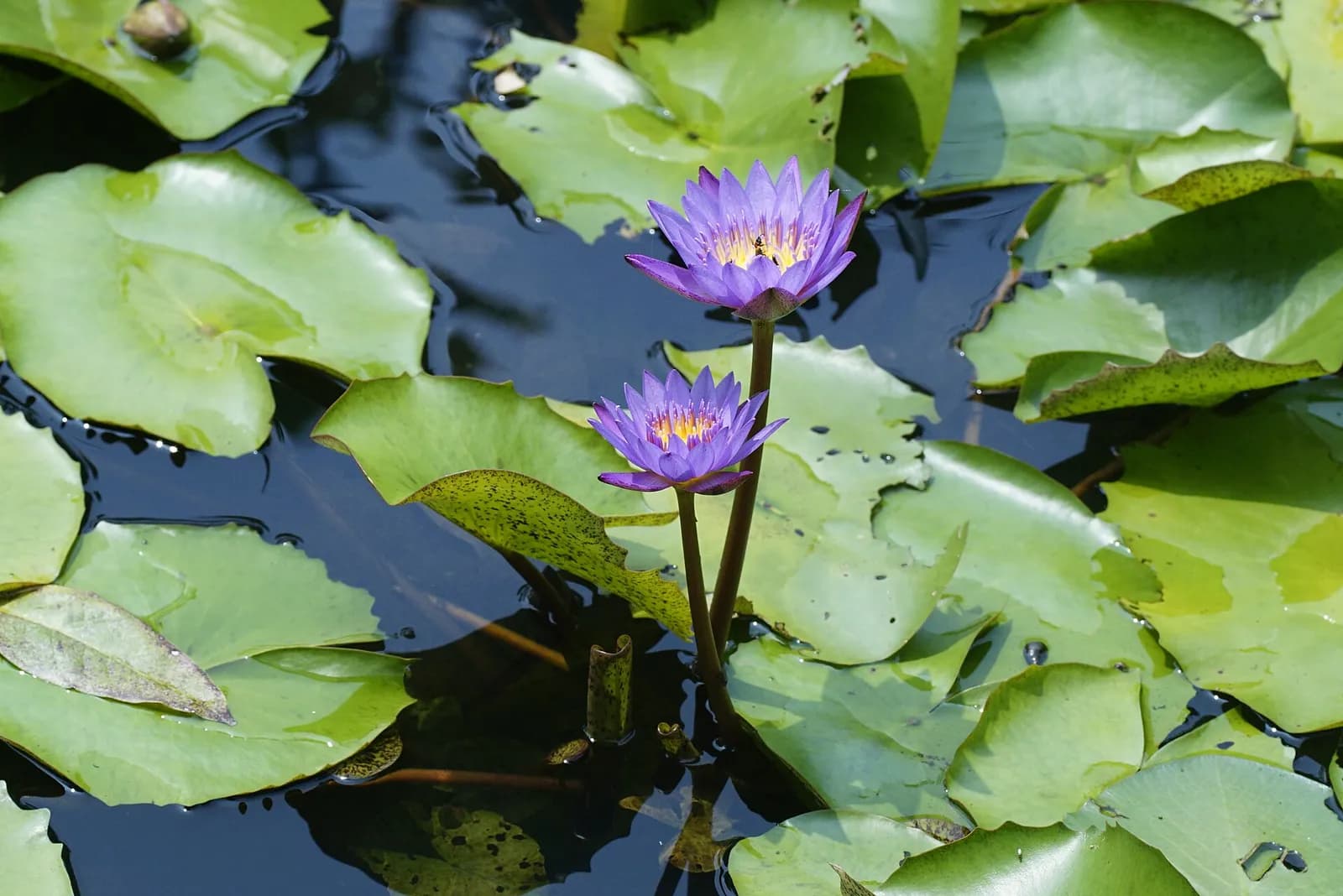
Chandni
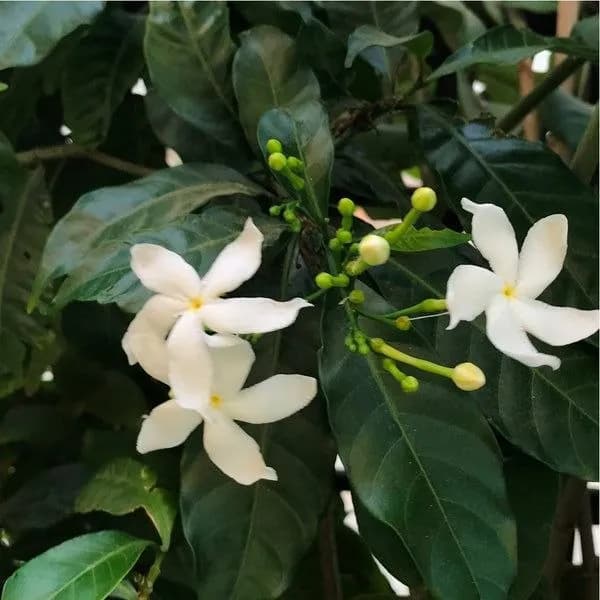
A white flower whose name means “moonlight.” Its five petals meet in a pinwheel spiral, and in Sanskrit that spiral is called nandyavarta, “the whorl of joy” — and the flower itself bears the same name. And nandyavarta is also one of the auspicious marks that the Gaudiya acharyas discern on the palms of Radha and Krishna.
Why the Flower Is Called Nandyavarta
In Hindi the shrub is called chandni — “moonlight”: the white flowers seem to glow at dusk and smell stronger towards night. In Sanskrit its chief name is nandyavarta, which may be read as “the whorl of joy”: nandi is joy, avarta a turn, a spiral. The five petals are wound into a little whirlpool — small wonder that in English it is the pinwheel flower.
But nandyavarta is not only a flower. The same word has long named an auspicious mark, a spiral of the swastika kind, and it stands in the lists of fortunate signs on the hands of a great personality. The Gaudiya acharyas discern it on the palms of Krishna Himself.
In the Govinda-lilamrita Srila Krishnadasa Kaviraja Goswami lists the nineteen marks with which the hands of Hari are stamped, and comes down to the very tips of His fingers:
śaṅkhordhendu-yavāṅkuśair ari-gadāc chatra-dhvaja-svastikair
yūpābjāsi-halair dhanuḥ-parighakaiḥ śrī-vṛkṣa-mīneṣubhiḥ |
nandyāvarta-cayais tathāṅguli-gatair etair nijair lakṣaṇair
bhātaḥ śrī-puruṣottamatva-gamakaiḥ pāṇī harer aṅkitau ||
“The palms of Hari are marked with the signs of a great personality — the conch, the half-moon, the barleycorn, the goad, the disc, the club, the parasol, the flag, the swastika, the sacrificial post, the lotus, the sword, the plough, the bow, the spear, the bilva tree, the fish, the arrow — and with clusters of nandyavarta whorls at the fingertips; all of this reveals Him to be Purushottama.”
The same whorl is on Radha’s fingers too. Analysing the marks of Her feet and hands in their commentaries on the Ujjvala-nilamani, Srila Jiva Goswami and Srila Vishvanatha Chakravarti Thakur name nandyavartas at the tips of Her fingers1. So the flower and the auspicious mark meet in a single name.
The Midnight Offering
In the Hari-bhakti-vilasa Srila Sanatana Goswami cites from the Narada Purana a list of twenty-five flowers dear to the Lord “as Lakshmi herself.” One of them is called madhu-pindika, and Sanatana Goswami explains: pindika is precisely nandyavarta2. The same word is audible in the name pinditagara, by which the shrub is still called.
The whorl is found on shilas as well, the sacred stones of the altar: the Hari-bhakti-vilasa calls auspicious those that bear it — such shilas “grant every aim”3.
Scripture knows the flower’s worth as well: a single nandyavarta flower is worth a thousand baka flowers, and only the karavira, the oleander, is valued above it4. And it knows the hour at which the flower is offered:
mallikāntu divārātryor naktaṁ sampaka-yūthike
nandyāvarttaṁ cārdha-rātre mālatīṁ prātar eva hi
“Mallika is offered both by day and by night; sondali and yuthika only at night; nandyavarta at the very middle of the night; and malati only in the morning.”
The hour has fallen in with the name: the flower of “moonlight” is offered at the very middle of the night.
Beyond Vraja
Shiva and Devi are worshipped with the white flowers of chandni as well — on a par with mallika, karavira and the lotus; and it enters the Puranic lists of flowers for puja. As an auspicious sign, the nandyavarta — a swastika with nine angles — stands beside the shrivatsa, the curl on Vishnu’s chest; in the solemn rites of the Mahabharata golden nandyavartas are carried among the objects that bring good fortune. The same name is given to a particular kind of palace as well: a quadrangle without a western gate, a dwelling for nobles and teachers.
Why the Ayurvedic Tagara Is Not Chandni
Besides nandyavarta, the shrub has a second Sanskrit name — tagara (in Hindi tagar). Two quite different plants bear it: our chandni and Indian valerian (Valeriana jatamansi), the fragrant root that Ayurveda prizes as a sedative, a remedy for insomnia and an aromatic material. Behind most of the classical prescriptions that speak of “tagara” stands the valerian; chandni never made it into the medical books. That is why the taste-rasa and potency-virya of “tagara” given in the nighantus, the Ayurvedic lexicons of medicinal plants, describe the valerian, and to transfer them to chandni would be a mistake.
Folk medicine, however, does know chandni: the bitterish root is chewed for toothache, and the white milky sap is used to treat the eyes and to bring down fever.
Botany
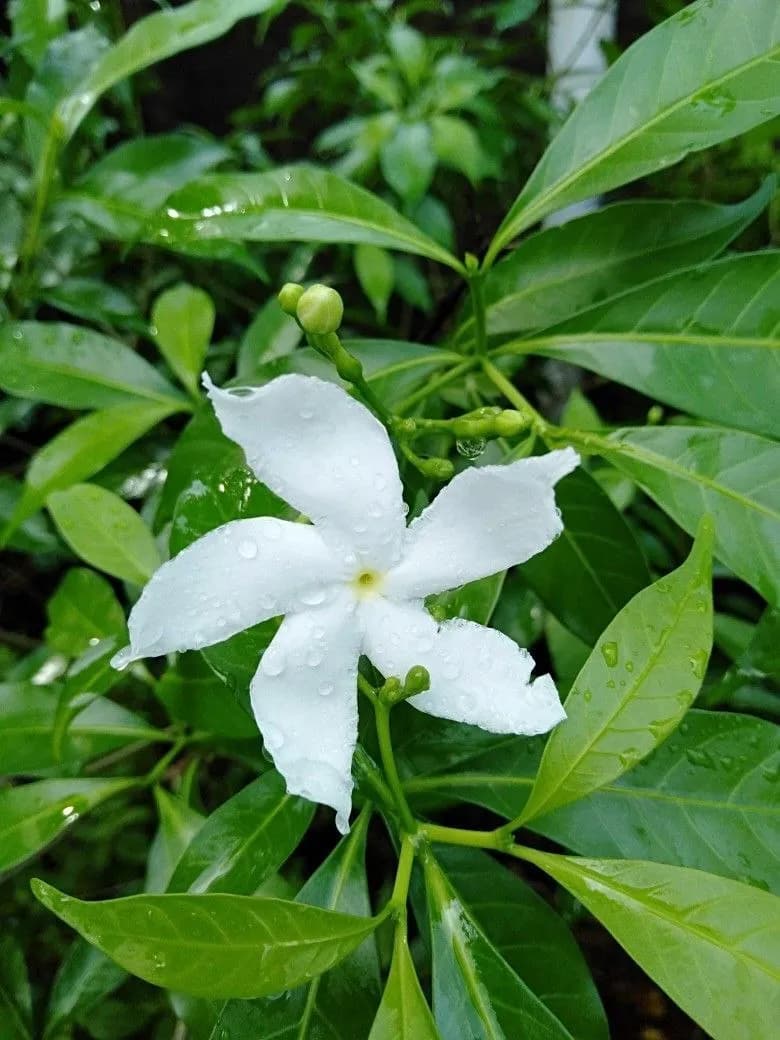
Chandni is Tabernaemontana divaricata, a shrub of the dogbane family (Apocynaceae): its kin is the oleander, not the jasmine, whatever the English name crape jasmine may promise. At times it draws itself up into a small tree with a slender crooked trunk; break a shoot and white milky sap comes out, which earned it the English name milk flower. The leaves are large, glossy and dark green. The flowers are gathered in clusters at the ends of the shoots; there are double-flowered varieties too. It is native to South and Southeast Asia and southern China: to hill thickets and open woodland.
Chandni in bloom
Sources
We build Vrajapedia together – with stories, verses, photographs and parikrama experience. If you know something more, tell us and it will appear on this page.