Barna
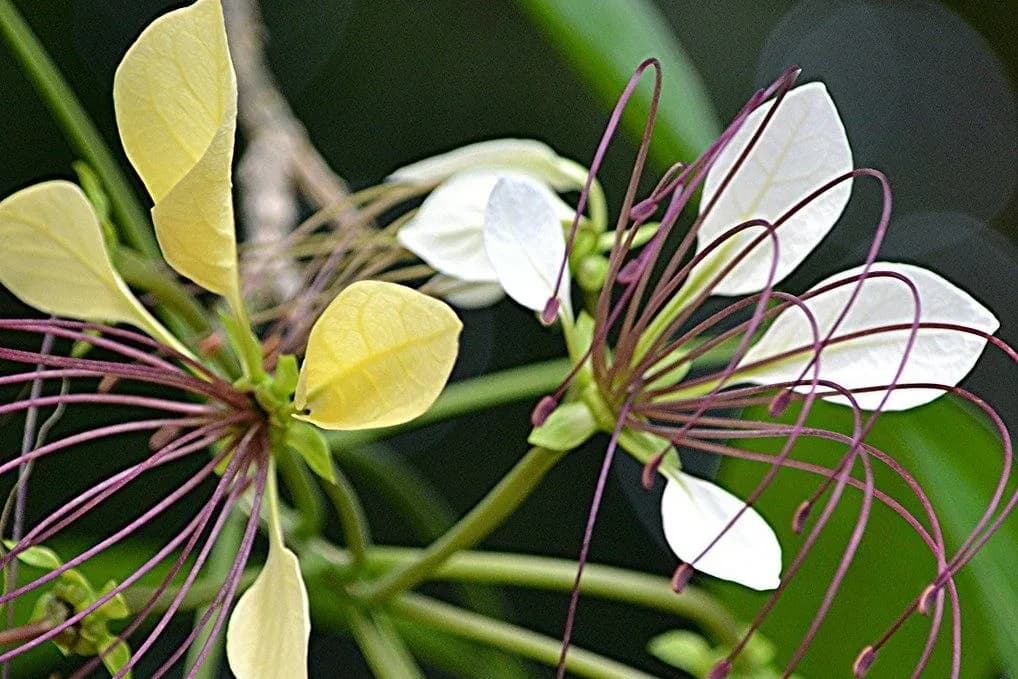
A tree with white flowers out of which long purple stamens shoot in every direction; it grows along riverbanks and by temple walls. In Sanskrit it is called varuṇa, in Hindi barna, and in English the temple plant. You will not meet barna in the tales of the forest pastimes of Vrindavan, yet it has a place of its own in Vraja — the kunja of the gopi Indulekha. And across the rest of India it is known as one of Ayurveda’s chief remedies for stones in the urinary tract.
Contents
A Place in Vraja
There are trees in Vraja without which the poetry of the pastimes cannot do: kadamba, tamala, bakula. Barna is not one of them — its name does not occur in the classical texts about Krishna’s pastimes in Vrindavan, and there is no line in which He stands beneath a barna. Its place is a different one. Around Radha-kunda stand the kunjas of Radha’s eight closest companions, each of its own colour; on the south-eastern bank is the kunja of Indulekha, called Purnendu, “the full moon.” In it everything is white:
śubhra-puṣpa-dalair vṛkṣair vallībhiś ca samanvitaḥ |
śubhrāli-pika-kīrādyaiḥ śabda-jñeyair nināditaḥ ||
“The trees and vines in it bear white flowers and white leaves, and white bees, cuckoos and parrots fill it with sound: one can tell them only by their voices.”
The White Kunja
The platforms and courtyards there are of crystal and moonstone; white lotuses, kumuda and jasmine are in bloom; and a chance visitor might not even make out Radha and Krishna as They play there at full moon in white garments. Barna, with its white flowers, is assigned precisely to this kunja — although the texts do not name it here. The one who serves in the kunja is Rati Manjari, Radha’s young maidservant: in the pastimes of Lord Chaitanya she comes as Srila Raghunatha dasa Goswami.
Beyond Vraja
Across the rest of India barna is well known, and above all as a tree of the temples. In English it is still called the sacred garlic pear: the fruits hang like small pears and smell of garlic. It lives on the border of land and water, and that is audible in its names: the Sanskrit varuṇa is the name of the lord of the waters, and the second name, setu, means “dam, causeway, bridge.”
Barna has a place in the service of Lord Jagannatha at Puri as well. Once in twelve or nineteen years the Nabakalebara is performed there: the Deities are carved anew, and the sevakas sent out to search look not for any neem but for the one that answers to some fifteen marks — four main branches, dark bark, the signs of the conch and the chakra on the trunk, water nearby, an anthill and a temple of Shiva. One of the marks is the neighbourhood of three rare trees, and barna is the first among them.
Ayurveda
In the Ayurvedic books the tree is called varuna. The Sushruta-samhita places it among the remedies that break up stones in the bladder, and a whole group of herbs is named after varuna — the varunadi-gana. It is used as well for disorders of the prostate, for rheumatic pain, to cleanse the blood and to revive the digestion.
The medicine is prepared from the bark, the root bark and the leaves. In taste (rasa) the bark is bitter and astringent, light and dry in quality, and in potency (virya) hot, with a pungent post-digestive effect (vipaka). That combination pacifies kapha and vata, but it may inflame pitta.
Botany
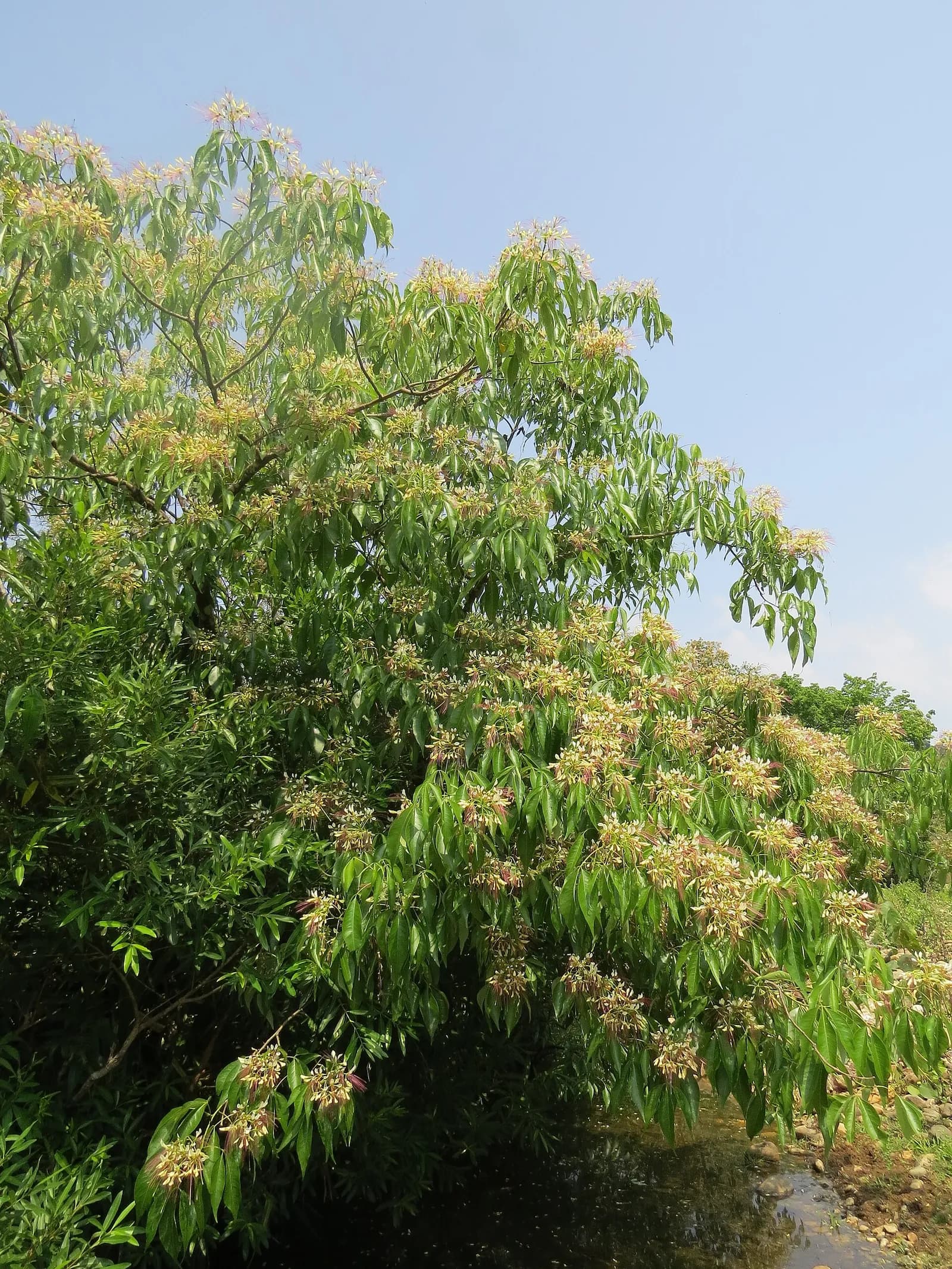
Barna is Crateva adansonii subsp. odora, a deciduous tree about ten metres tall. Its leaves are trifoliate: three leaflets on one long stalk — hence the English name three-leaf caper. The most striking thing is the flowers: white or cream, about five centimetres, gathered in flat clusters at the ends of the branches. Each flower has many stamens, far longer than the petals; they are what earned the tree the name of spider tree. The fruits are round, the size of a plum, with a hard rough rind; the seeds inside are like small beans. Outside India barna grows in Sri Lanka and further east, as far as Vietnam.
Barna in bloom
Sources
We build Vrajapedia together – with stories, verses, photographs and parikrama experience. If you know something more, tell us and it will appear on this page.


