Man-sarovara
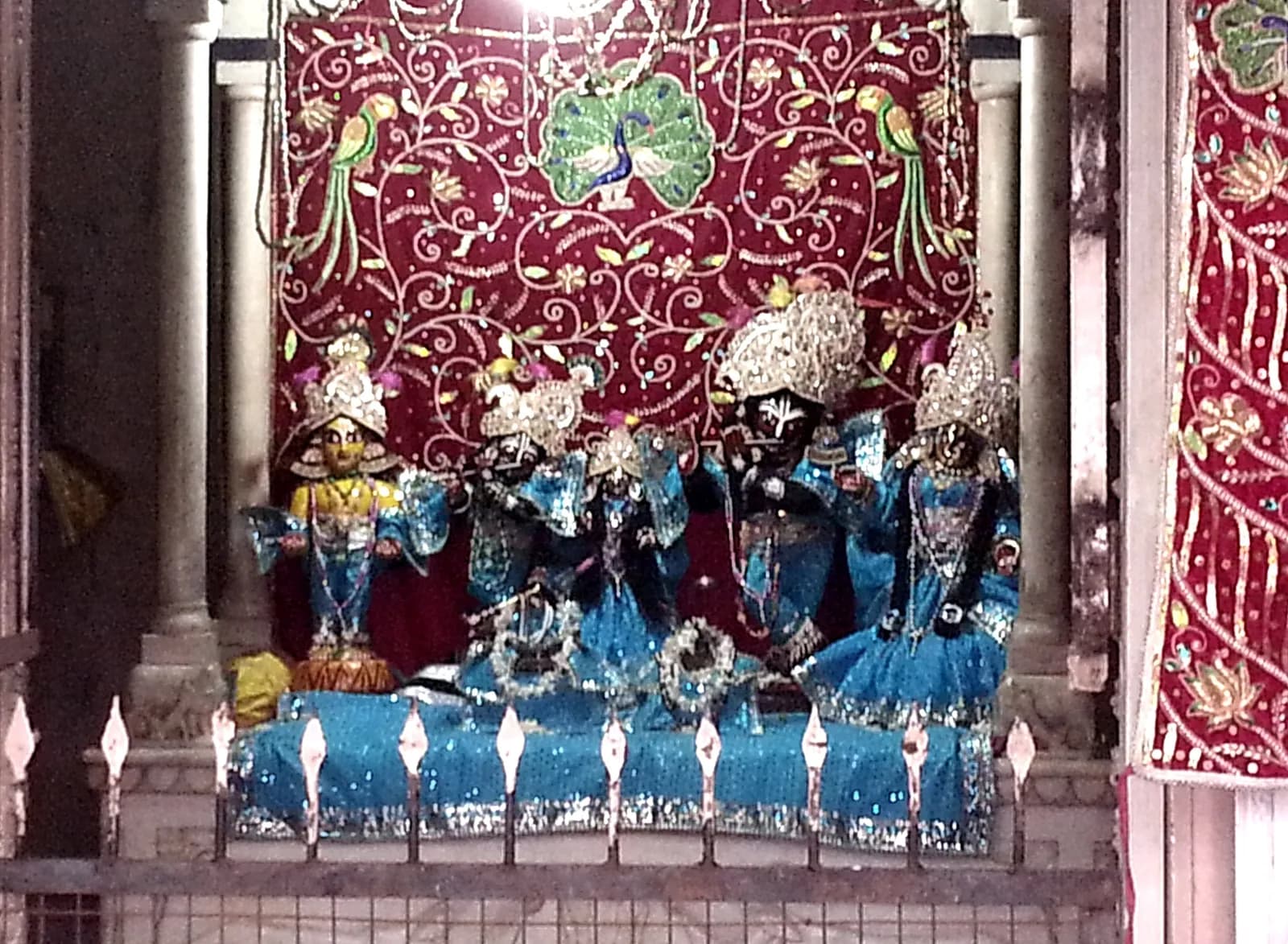
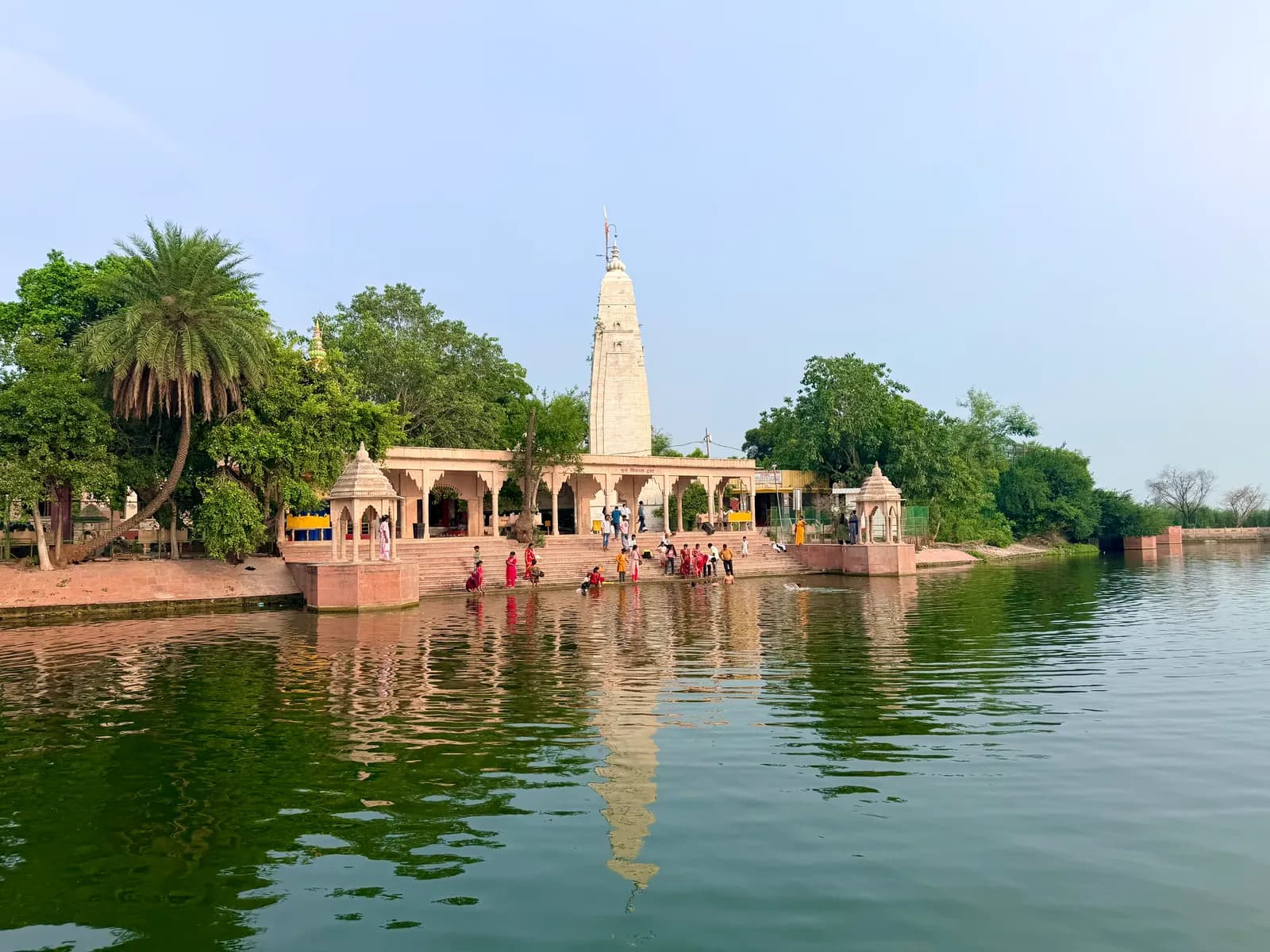
Man-sarovara is a small forest lake three kilometres east of Vrindavan, across the Yamuna, in the Belvan wood. Its name means “the lake of mana” – of jealous loving anger. Tradition says that during the autumn rasa dance Radha was hurt that Krishna danced with the other gopis just as He danced with Her. She left alone, crossed the river and wept in a grove until Her tears filled this lake. Krishna followed Her footprints, found Her and laid His flute and His head at Her feet, asking forgiveness. That very scene is shown to this day by a painting in the old temple on the shore.
The lila of loving anger
Mana is loving anger, a falling-out born of jealousy: the lover feels slighted, and hurt gets the upper hand over tenderness. In Radha it flares up when Krishna gives His attention to other gopis. The whole lila of Man-sarovara rests on this feeling.
It all began on a sandy shoal of the Yamuna, where the autumn rasa dance was going on. Radha noticed that Krishna treated Her just as He treated the other cowherd girls, and it stung Her. She left the dance, crossed the river alone and went off into a secluded wood, into a dense grove of pilu trees among kadambas and tamalas. There She sat down on a flat stone. There was no one nearby but the crickets, the bees and the birds. Radha wept – and Her tears filled the pond.
She wept not for Herself. By counting Her equal to the rest, Radha thought, Krishna was robbing His own Self: no one can love Him and delight Him as She can. “What a cheat!” She thought. “All His life He steals butter, curd, clothes and hearts from others, and in the end He robs His own Self.” Her tears were for His loss.
Krishna, meanwhile, caught Himself: without Radhika the joy of the dance had faded. He left the gopis, walked along the bank of the Yamuna following Her footprints, crossed the river, passed Belvan – and found Her. What came next is what has drawn pilgrims here ever since: Krishna laid His flute and His head at Her lotus feet, admitted His fault and promised never to act so again. The words placed in His mouth are a verse from the “Gita-govinda” of Srila Jayadeva Goswami:
smara-garala-khaṇḍanaṁ mama śirasi maṇḍanaṁ
dehi pada-pallavam udāram
jvalati mayi dāruṇo madana-kadanānalo
haratu tad-upāhita-vikāram
priye! cāruśīle!
“My beloved! Offer the fresh buds of your enchanting feet as an ornament upon my head, so the devastating effect of Cupid’s poison may be alleviated and the harsh fire of amorous desires may also be relieved.”
The pique that became a “lake of the heart”
Radha kept an indifferent face, but in Her heart She had already softened: Her mana was not a quarrel but a way of giving Krishna the greatest love. The separation ended in a meeting. That is why the lake has a second name as well – Hridaya-sarovara, “the lake of Radha’s heart”: mana here is not a falling-out but that state of love in which its strength is seen most clearly.
The mood of mana in the shastras
The word “cheat” did not escape Radha by chance. Shivarama Swami, retelling the lila of Man-sarovara, cites a verse from “Srimad-Bhagavatam” in which the gopis throw the very same word at Krishna. It was spoken on another night, but the feeling is the same:
pati-sutānvaya-bhrātṛ-bāndhavān
ativilaṅghya te ’nty acyutāgatāḥ
gati-vidas tavodgīta-mohitāḥ
kitava yoṣitaḥ kas tyajen niśi
“Dear Acyuta, You know very well why we have come here. Who but a cheater like You would abandon young women who come to see Him in the middle of the night, enchanted by the loud song of His flute? Just to see You, we have completely rejected our husbands, children, ancestors, brothers and other relatives.”
The lake has no praise-verse of its own in the Puranas. This is a parikrama place: it lives by the prose of guidebooks and by the tradition passed on by local people and sadhus.
Gopishvara and the ascetic Svayamprakasha
Two more stories are tied to Man-sarovara, and both are about changing form here.
The first is about Shiva. He had long wished to see the rasa-lila, but at the entrance to the rasa-mandala he was stopped by Lalita and Vishakha: no man may come in, one may enter only in the body of a gopi. Lalita advised him to bathe in Man-sarovara – and he came out of the lake as a cowherd girl. Krishna, meeting the new cowherd girl, gave her the name Gopishvara and charged her from then on to look after the gopis and to guard the rasa-mandala from outsiders. Rajashekhara das, recording this tradition, notes that by another version Shiva bathed in the neighbouring Brahma-kunda – but common opinion points precisely to Man-sarovara.
The second story is about Krishna Himself. Once He came out to a group of gopis who were performing a long austerity here, in the guise of a beggar ascetic – in a tiger skin, with matted hair, having changed even His voice. “My name is Svayamprakasha,” He said, “and I live by Man-sarovara. I take no food; I am sustained only by mystic power, thanks to which I have become all-knowing.” The gopis asked for proof: let him say what is on their minds. The ascetic told them to close their eyes, and while they stood with their eyes shut He returned to His own form of Shyamasundara – every thought of the gopis was of Him alone. In this story Krishna calls Man-sarovara His home, and no other such place is fixed to the lake.
Where it is and what lies around
It lies on the eastern side of the Yamuna, beyond Vrindavan, in a chain of places: Bhandiravan – Mat – Belvan – Man-sarovara – Lohavan. Nearby, in the village of Gangralli-gaon between Mat and Belvan, there is Krishna-kunda: there Krishna and His friends watered the cows and played in the water. And at the western edge of Seva-kunja in Vrindavan there is an inconspicuous lane called Mana-gali, “the path of pique”: along it, they say, Radha went off in mana to Man-sarovara.
The surroundings of the lake have changed as well. In the middle of the sixteenth century the Yamuna split into two channels and encircled Man-sarovara – the lake found itself on an island. Raghava Pandit found it so when he brought Srinivasa Acharya and Narottama das Thakur here. In the “Bhakti-ratnakara” he says that formerly the Yamuna ran in a single channel and the lake lay beyond the river, whereas now the river goes round it on both sides. As recently as some two hundred years ago Man-sarovara stood on an island; then the eastern channel dried up, and only the western one remained.
Two Man-sarovaras
Two different lakes in Vraja bear one name. This one is on the eastern bank of the Yamuna, with its grove of pilu and the painting in the temple. The other is in the Bahulavan wood on the western bank; the Man-sarovara there has merged with Sankarshana-kunda and is also known as Krishna-kunda and Bahula-kunda. To it belong the story of the cow Bahula, the verse of the “Skanda Purana” about bathing in the month of chaitra and the bathing of Jahnava-devi in 1582 – there is no need to tie them to the lake of this article. There is a third namesake as well, in Kamyavan, and the famous Himalayan Manasa-sarovara.
Man-sarovara today
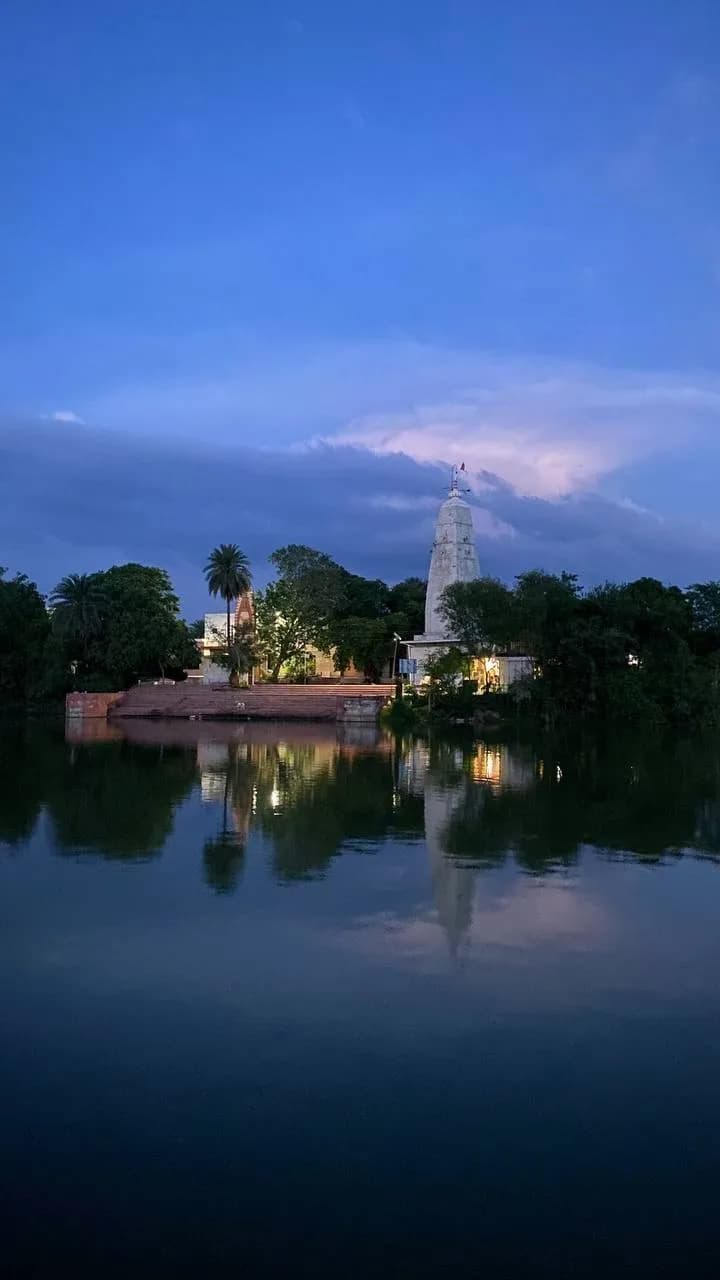
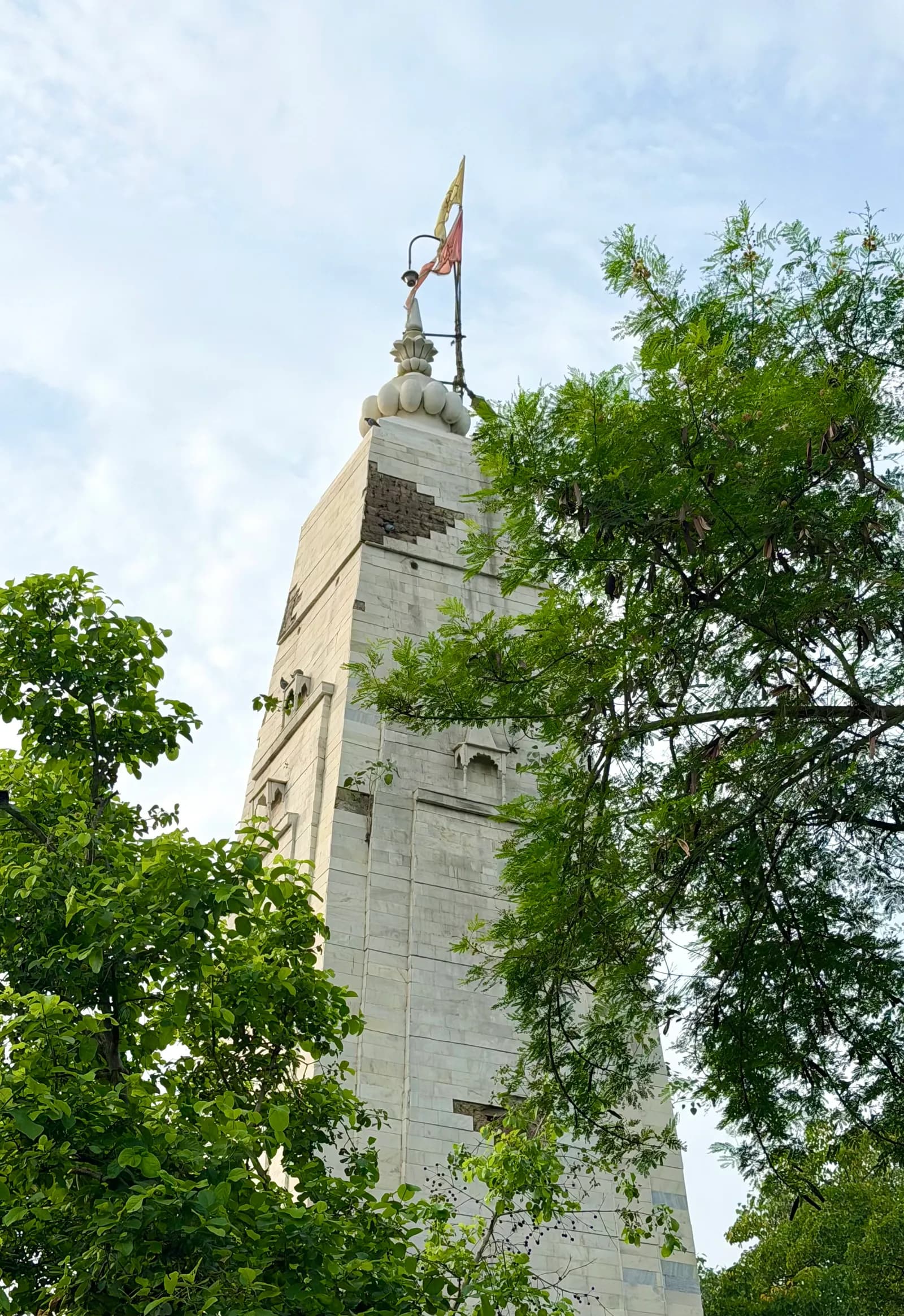
Man-sarovara is still a quiet, secluded lake: ducks, herons and cranes, and around it the same pilu, kadamba and tamala trees. Crowds of pilgrims do not come here – a rarity for Vraja. On the shore stands an old temple, the Man-mandir, and in it they worship that very painting in which Krishna lays down His flute and bows His head at Radha’s feet. The sources name neither a founder nor an age for the temple. And the local people simply call the lake by Radha’s own name.
Sources
We build Vrajapedia together – with stories, verses, photographs and parikrama experience. If you know something more, tell us and it will appear on this page.